How to Choose the Right Storage Unit Size: Complete Guide |
| HOW TO CHOOSE THE RIGHT STORAGE UNIT SIZE
⏱ 19 min read ·
📄 #3,620 words
Learn exactly what storage unit size you need. Compare 5x5 to 10x30 units, see what fits in each, and get tips to avoid paying for unused space.
|
C hoose a storage unit size by matching your inventory to standard unit dimensions: 5x5 for boxes and small items, 5x10 for a studio apartment, 10x10 for a one-bedroom home, 10x15 for two bedrooms, and 10x20 or larger for full households or vehicles. Add 20% extra space if you need walk-in access to your belongings.
| Key Points: | |
|---|---|
| • | A 10x10 unit (100 sq ft) holds the contents of a typical one-bedroom apartment, including furniture and 20-30 boxes |
| • | Drive-up units reduce loading time by 40-60% compared to interior units with hallways and elevators |
| • | Stacking boxes and using vertical space can reduce your required footprint by up to 30% |
| • | Choose one size larger if you plan to access items frequently or store for longer than 6 months |
| • | Standard unit heights range from 8 to 10 feet, providing 400-1,000 cubic feet of usable space |
Selecting the wrong storage unit size costs money. Too small, and you cannot fit everything. Too large, and you pay monthly for empty space you never use. According to the Extra Space Storage size guide, the most common mistake renters make is underestimating their storage needs, leading to last-minute upgrades and double moves.
This guide walks through every standard storage unit size, explains exactly what fits in each, and provides a step-by-step method for calculating your space requirements. Whether you are storing seasonal gear in Moab, clearing out a spare room, or relocating an entire household, you will find the right fit.
Storage Unit Sizes Explained: Quick Reference Chart
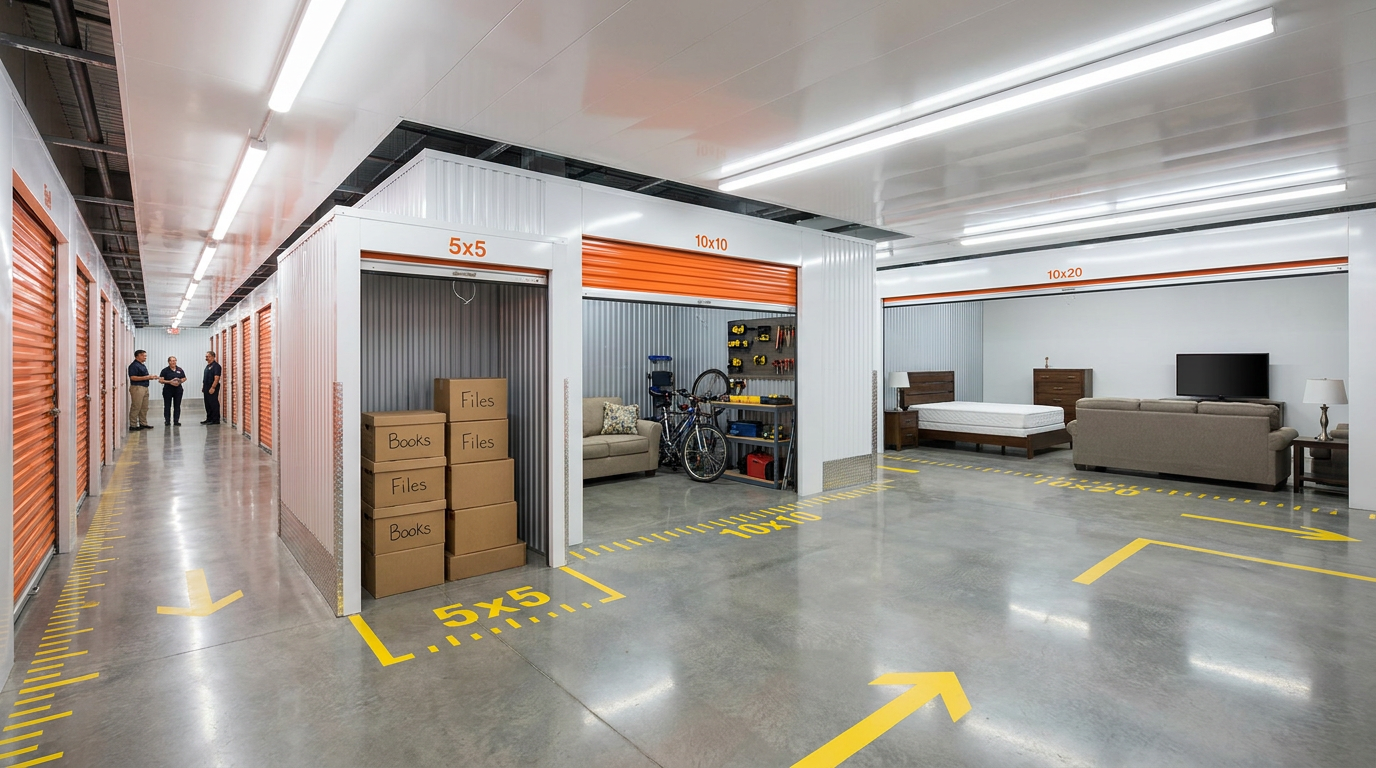
Storage units follow standardized dimensions across the self-storage industry. The Self Storage Association reports that 10x10 units account for approximately 40% of all rentals, making them the most popular size nationwide. Understanding these dimensions helps you visualize exactly how much space you are renting.
| Unit Size | Square Feet | Comparable To | Best For |
|---|---|---|---|
| 5x5 | 25 sq ft | Small closet | Boxes, seasonal items, small furniture |
| 5x10 | 50 sq ft | Walk-in closet | Studio apartment, mattress set, dresser |
| 10x10 | 100 sq ft | Half a one-car garage | One-bedroom apartment, small office |
| 10x15 | 150 sq ft | Large bedroom | Two-bedroom apartment, appliances |
| 10x20 | 200 sq ft | One-car garage | Three-bedroom home, vehicle storage |
| 10x30 | 300 sq ft | One-and-a-half-car garage | Large home, business inventory, boats |
Unit heights typically measure 8 to 10 feet, which significantly increases usable volume. A 10x10 unit with 8-foot ceilings provides 800 cubic feet of storage space. Stacking boxes and using shelving systems can nearly double your effective capacity compared to floor-only storage.
What Fits in a 5x5 Storage Unit?
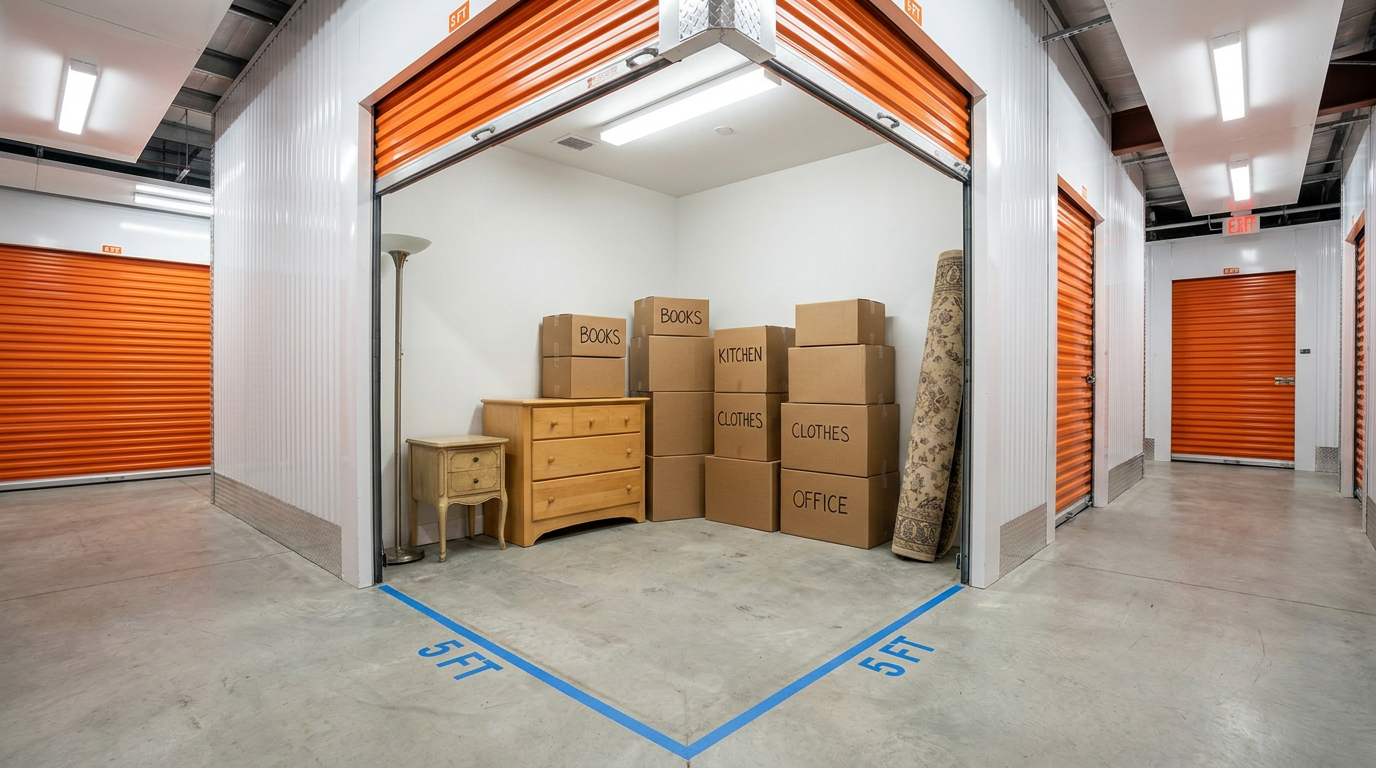
A 5x5 storage unit provides 25 square feet of floor space, roughly equivalent to a small reach-in closet. This compact size works well for college students between semesters, seasonal decorations, or overflow items from a garage cleanout. Monthly costs for 5x5 units typically range from $40 to $75 depending on location and features.
Specific items that fit in a 5x5 unit include: 10-15 medium moving boxes, a small dresser, a twin mattress set (stored upright), skis and snowboards, golf clubs, camping gear, holiday decorations, and small power tools. The limited footprint requires strategic stacking, with heavier items on the bottom and fragile boxes on top.
This size does not accommodate large furniture pieces. Sofas, dining tables, and queen beds require at least a 5x10 unit. If you have more than 20 boxes or any furniture larger than a nightstand, consider upgrading to the next size.
What Fits in a 5x10 Storage Unit?
A 5x10 storage unit offers 50 square feet, comparable to a large walk-in closet. According to Public Storage's size guide, this represents the most popular choice for individuals storing the contents of a studio apartment or single room. At Moab Self Storage, 5x10 drive-up units rent for $87.50 per month with no deposit required.
A 5x10 unit accommodates: a queen or king mattress set, a small sofa or loveseat, a dresser, a desk and chair, 15-25 boxes, bicycles, and outdoor recreation equipment. The 10-foot depth allows you to place larger items against the back wall with boxes stacked in front.
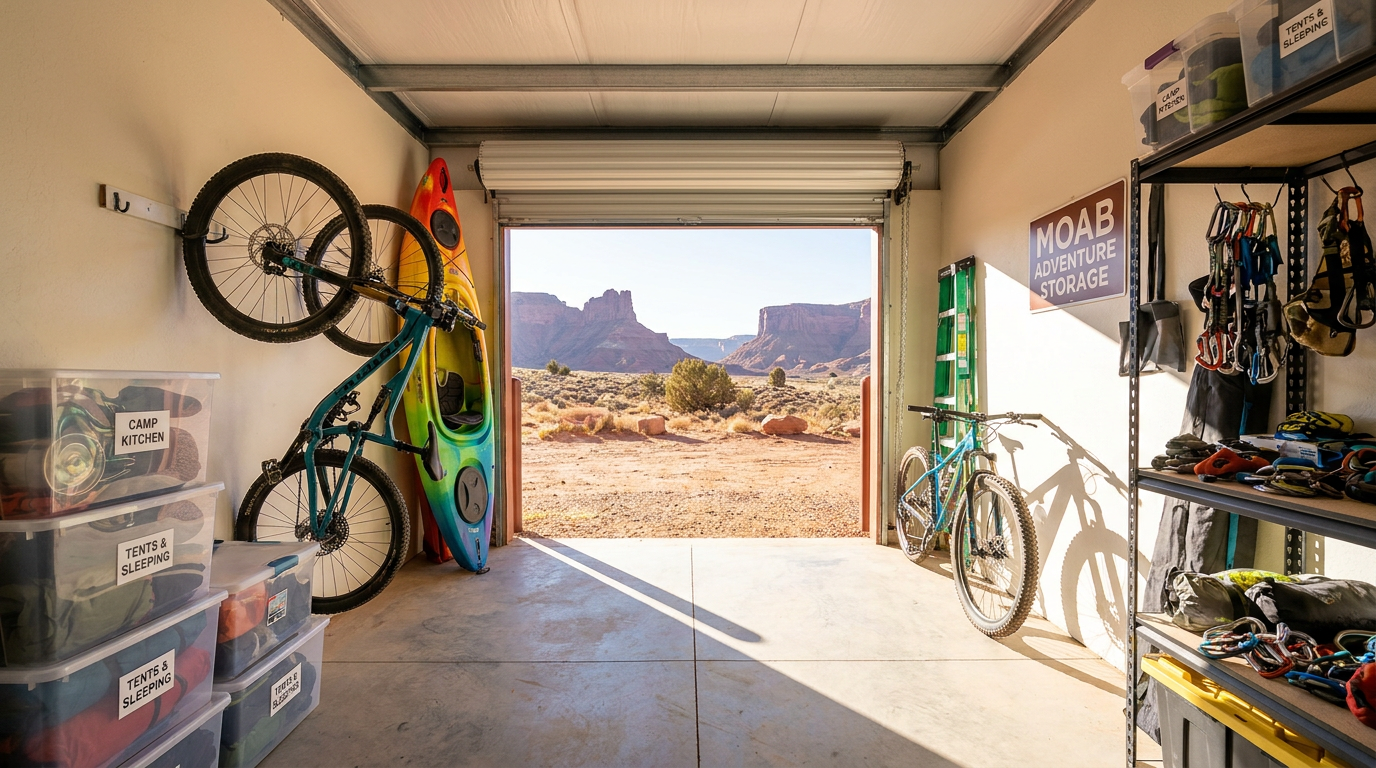
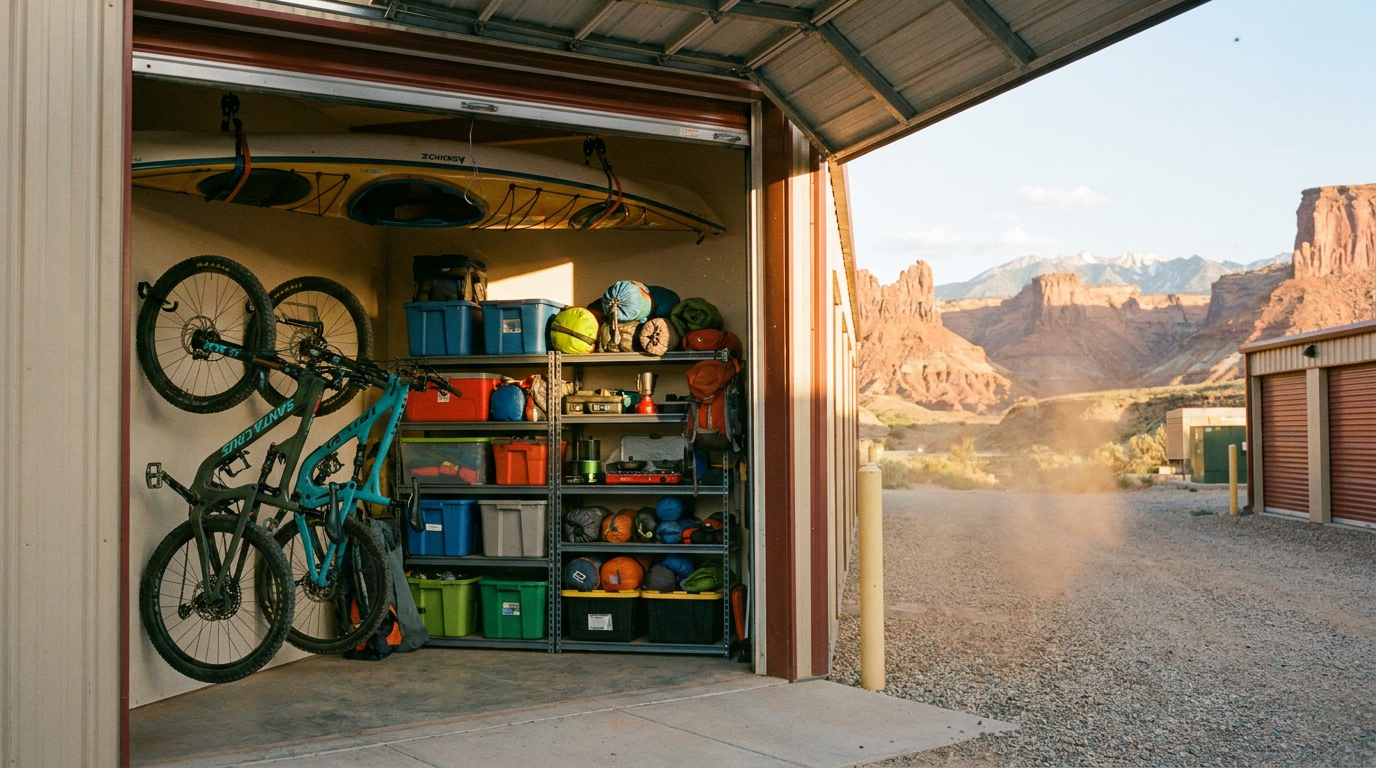
For Moab residents storing mountain bikes, camping equipment, or kayaking gear between adventures, a 5x10 provides adequate space without overpaying. The drive-up access at Moab Self Storage makes loading and unloading heavy gear straightforward, eliminating the need to navigate hallways or elevators.
5x10 Unit Packing Strategy
Maximize your 5x10 by placing the mattress set vertically against the back wall. Position the dresser and any tall furniture pieces along the side walls. Stack uniform-sized boxes in the center, leaving a narrow aisle for access if needed. Disassemble bed frames to save floor space.
What Fits in a 10x10 Storage Unit?
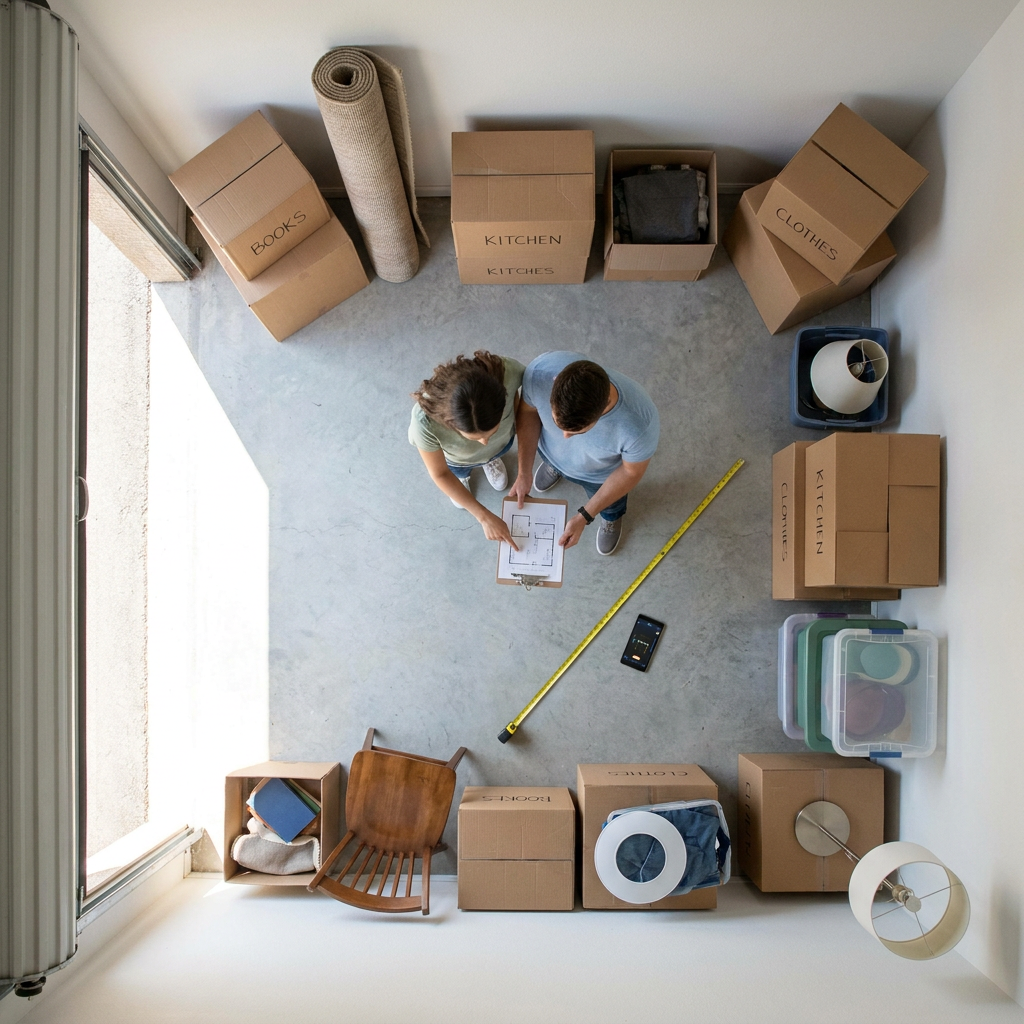
A 10x10 storage unit contains 100 square feet, equivalent to half of a standard one-car garage. This size handles the contents of a typical one-bedroom apartment, including living room furniture, bedroom sets, and kitchen items. The U-Haul storage guide identifies 10x10 as the industry's most rented unit size.
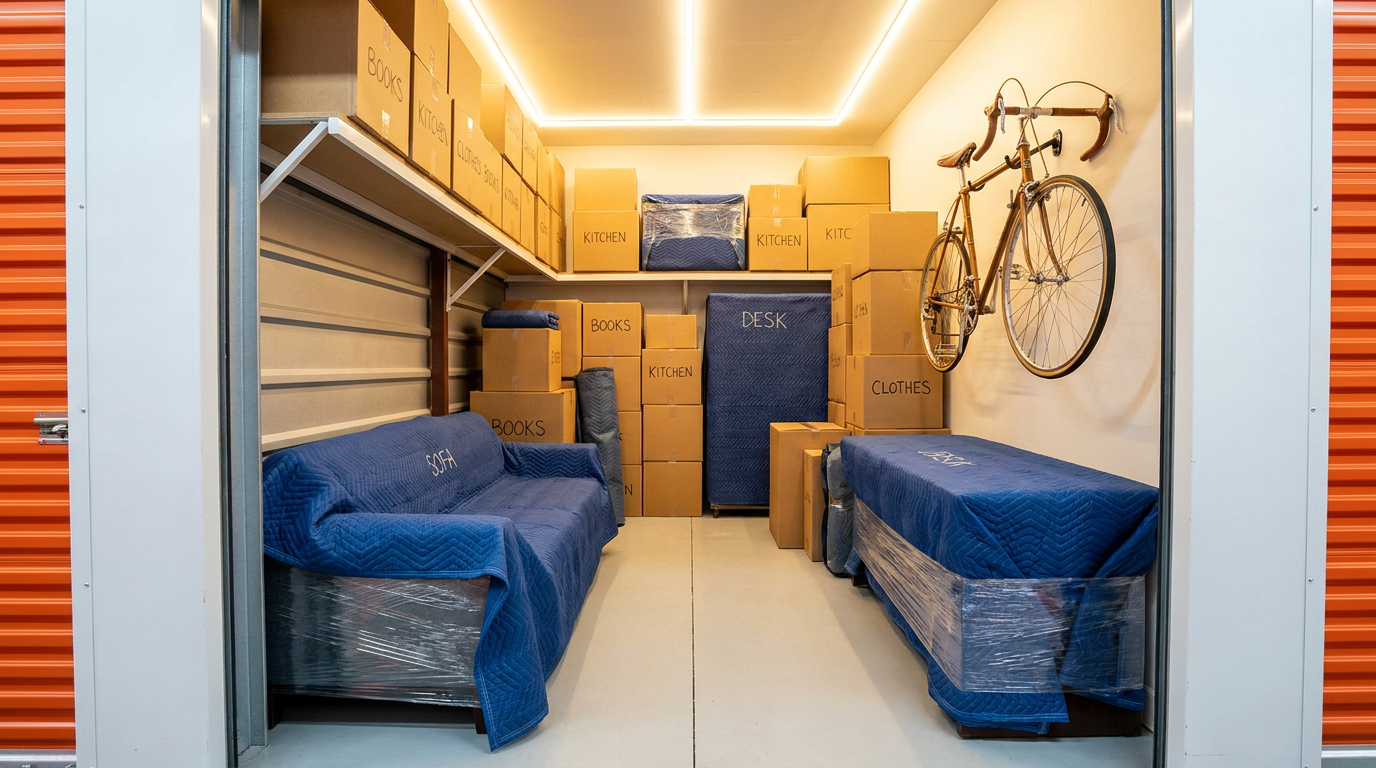
Standard contents for a 10x10 unit include: a sofa, a coffee table, two end tables, a queen bed with frame, a dresser, a nightstand, a small dining set (table with 2-4 chairs), a TV stand, and 30-40 boxes. Business owners frequently use 10x10 units for inventory storage, office furniture during relocations, or seasonal merchandise.
At Moab Self Storage, 10x10 drive-up units are available for $114.50 per month. The facility's 24/7 access means business owners can retrieve inventory at any hour, and the fully paved lot simplifies loading during Moab's occasional rain or snow.
10x10 Unit: Actual Dimensions Matter
Are 10x10 storage units actually 10x10? Interior dimensions vary by facility. Most units measure between 9'6" x 9'6" and 10' x 10'. The difference amounts to approximately 5-10 square feet. Always verify interior dimensions before renting, especially if you have furniture that must fit precisely.
What Fits in a 10x15 Storage Unit?
A 10x15 storage unit provides 150 square feet, suitable for a two-bedroom apartment or a household with larger furniture pieces. This size accommodates major appliances like refrigerators and washing machines alongside standard furniture. Monthly costs typically range from $100 to $175 depending on location.
A 10x15 unit holds: a full living room set (sofa, loveseat, chairs, tables), a complete bedroom set, a dining room table with 6 chairs, major appliances (refrigerator, washer, dryer), 40-50 boxes, and outdoor furniture. The extra 50 square feet compared to a 10x10 provides meaningful flexibility for households with accumulated belongings.
Moab Self Storage offers 10x15 drive-up units at $139.50 per month. For families relocating to the Moab Valley or second-home owners storing furnishings between visits, this size balances capacity with cost efficiency.
What Fits in a 10x20 Storage Unit?
A 10x20 storage unit equals 200 square feet, matching the dimensions of a standard one-car garage. This size stores the contents of a two to three-bedroom home or serves as vehicle storage. The 20-foot depth accommodates most cars, trucks, motorcycles, and recreational vehicles under 20 feet in length.
Contents for a 10x20 unit include: complete household furnishings from a three-bedroom home, a mid-size vehicle or truck, multiple motorcycles, ATVs or UTVs, business equipment and inventory, and construction materials or tools. The StorageMart size calculator recommends this size for households exceeding 1,500 square feet of living space.
At Moab Self Storage, 10x20 drive-up units rent for $374 per month. The drive-up configuration allows vehicles to pull directly to the unit door, simplifying the process of storing cars, Jeeps, or adventure vehicles between Moab trips.
10x20 for Vehicle Storage
Standard sedans and SUVs fit comfortably in a 10x20 unit with room remaining for additional items. Measure your vehicle before renting: most passenger vehicles range from 14 to 18 feet in length and 6 to 7 feet in width. Leave 12-18 inches of clearance on each side for door opening and maneuvering.
What Fits in a 10x30 Storage Unit?
A 10x30 storage unit offers 300 square feet, equivalent to one and a half standard garages. This size handles the contents of a four to five-bedroom home, large business inventories, or oversized vehicles including boats and RVs under 30 feet. Expect monthly costs between $200 and $400 depending on market and features.
A 10x30 unit accommodates: complete furnishings from a large home (4+ bedrooms), commercial inventory for retail or wholesale businesses, boats up to 25 feet, RVs and travel trailers under 30 feet, multiple vehicles, and contractor equipment and materials. This size provides the most flexibility for complex storage needs.
For Moab-area businesses, outdoor outfitters, or property managers handling multiple rental units, the 10x30 size eliminates the need for multiple smaller units. Consolidating storage into a single large unit reduces monthly costs and simplifies access.
How to Calculate the Storage Unit Size You Need
Calculating your required storage space involves three steps: inventory your items, estimate cubic footage, and match to available unit sizes. This systematic approach prevents both undersizing (requiring a second unit) and oversizing (paying for unused space).
Step 1: Create a Complete Inventory
Walk through your home room by room and list every item you plan to store. Start with large furniture: sofas, beds, tables, dressers, and appliances. These bulky items determine your minimum footprint. Then count boxes, estimating how many you will need for remaining items.
Use these estimates for box counts: a typical bedroom requires 8-15 boxes, a kitchen needs 10-20 boxes, a bathroom uses 3-5 boxes, and a home office requires 5-10 boxes. Add specialty items like sporting equipment, tools, and seasonal decorations to your list.
Step 2: Estimate Cubic Footage
Multiply length times width times height for each major item. A standard sofa measures approximately 7' x 3' x 3' (63 cubic feet). A queen mattress set takes up roughly 5' x 7' x 1' (35 cubic feet). A medium moving box (18" x 18" x 16") contains about 3 cubic feet.
Add 20-30% to your total for packing inefficiency. Items do not stack perfectly, and you need space for protective wrapping, padding, and access aisles. If you plan to visit your unit frequently, add 30% to allow walking room.
Step 3: Match to Unit Size
Divide your total cubic footage by the unit height (typically 8 feet) to determine required square footage. A calculation showing 600 cubic feet divided by 8 feet equals 75 square feet, suggesting a 10x10 unit (100 square feet) provides adequate space with room for access.
| Total Cubic Feet | Recommended Unit | Typical Contents |
|---|---|---|
| Up to 200 cu ft | 5x5 | Boxes and small items only |
| 200-400 cu ft | 5x10 | Studio or one room |
| 400-800 cu ft | 10x10 | One-bedroom apartment |
| 800-1,200 cu ft | 10x15 | Two-bedroom apartment |
| 1,200-1,600 cu ft | 10x20 | Three-bedroom home |
| 1,600+ cu ft | 10x30 | Large home or business |
When to Choose a Larger Storage Unit
Several situations justify paying for a larger unit than your calculations suggest. Frequent access, long-term storage, and valuable items all benefit from extra space. The additional monthly cost often saves money compared to damaged goods or the hassle of upgrading mid-lease.
Frequent access needs: If you visit your unit weekly or more often, upgrade one size. A 10x10 becomes a 10x15. The extra space creates aisles for walking and prevents the need to unstack and restack boxes during each visit.
Long-term storage (6+ months): Items shift over time. Boxes compress, furniture settles, and you may add items during your rental period. A buffer of 20-30% extra space accommodates these changes without requiring a unit transfer.
Valuable or fragile items: Antiques, electronics, and artwork require careful placement away from walls and other items. Extra space allows proper positioning and reduces the risk of accidental damage during loading or retrieval.
Business inventory: Commercial storage needs fluctuate seasonally. Retailers experience 30-50% inventory increases during holiday seasons. Renting a larger unit year-round costs less than upgrading temporarily during peak periods.
When a Smaller Storage Unit Works
Choosing the minimum viable size saves money when circumstances allow. Short-term storage, infrequent access, and efficient packing all support downsizing. A smaller unit also encourages decluttering before storage.
Short-term storage (under 3 months): Temporary situations like home renovations, military deployments, or between-lease gaps do not require access aisles. Pack tightly, retrieve everything at once, and save on monthly costs.
Infrequent access: If you plan to load your unit once and unload it once without interim visits, maximize density. Place frequently needed items (if any) near the door and pack the remainder tightly.
Stackable, uniform items: Boxes of the same size stack efficiently with minimal wasted space. If your storage consists primarily of boxed items rather than furniture, you need less floor space than calculations suggest.
Disassembled furniture: Breaking down bed frames, tables, and shelving units reduces their footprint by 40-60%. A disassembled queen bed frame occupies roughly 2 square feet rather than 35 square feet when assembled.
Drive-Up Storage Units: Why Access Matters
Drive-up storage units allow you to park your vehicle directly at the unit door, eliminating hallways, elevators, and long walks with heavy items. This configuration reduces loading and unloading time by 40-60% compared to interior units. For furniture, appliances, and heavy equipment, drive-up access is not merely convenient but often essential.
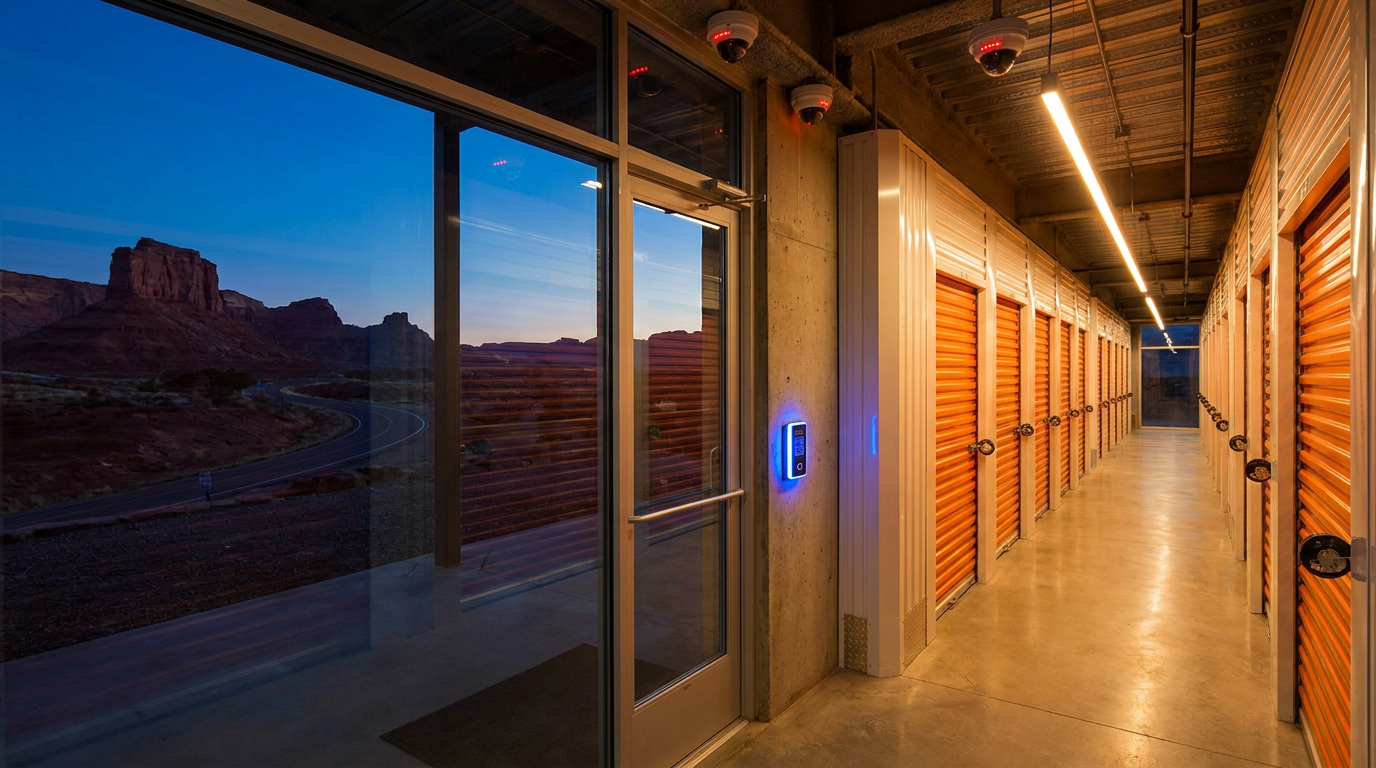
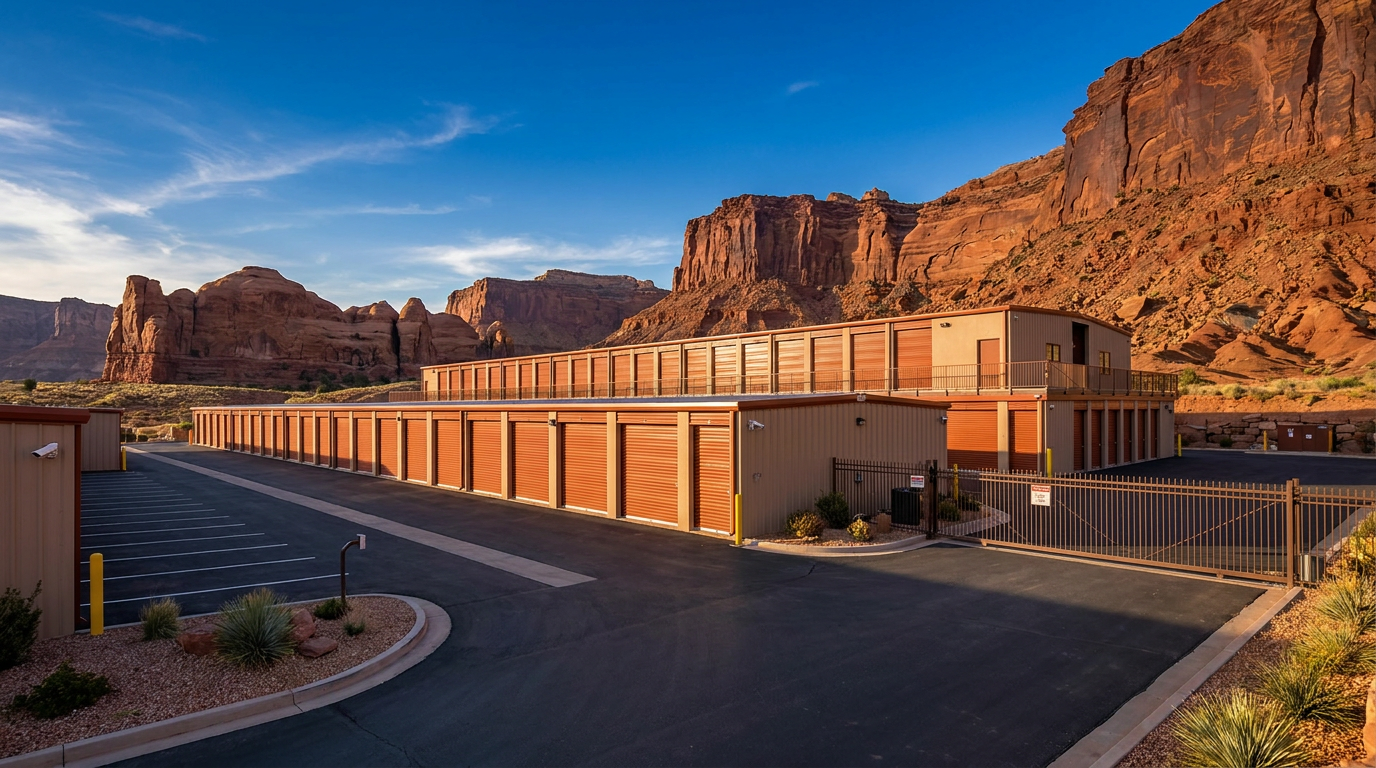
All units at Moab Self Storage feature drive-up access on a fully paved lot. The facility's location just off U.S. Highway 191 provides easy access from anywhere in the Moab Valley, Spanish Valley, Castle Valley, or surrounding areas. With 24/7 access and digital video surveillance, you can load or retrieve items on your schedule with confidence.
Drive-up units particularly benefit: households moving furniture without professional movers, businesses loading and unloading inventory regularly, outdoor enthusiasts storing heavy recreation equipment, and anyone with mobility limitations that make long walks difficult.
Storage Unit Size Guide for Moab Residents
Moab's unique lifestyle creates specific storage needs. Outdoor recreation gear, seasonal tourism businesses, and second-home ownership all influence sizing decisions. Understanding these local factors helps Moab Valley residents choose appropriately.
Outdoor Recreation Storage
Mountain bikes, kayaks, paddleboards, camping gear, and climbing equipment accumulate quickly for Moab outdoor enthusiasts. A 5x10 unit stores 4-6 bikes plus associated gear. Kayaks and paddleboards require at least 10 feet of length, making 5x10 the minimum practical size for water sports equipment.
ATVs, UTVs, and dirt bikes fit in 10x15 or larger units depending on quantity. A single ATV requires approximately 50 square feet including maneuvering room. Multiple vehicles or a UTV with trailer needs a 10x20 or 10x30 unit.
Seasonal Business Storage
Moab's tourism industry peaks from March through October, creating inventory fluctuations for local businesses. Outfitters, rental companies, and retail shops benefit from storage that expands and contracts with demand. Month-to-month leases at Moab Self Storage accommodate seasonal adjustments without long-term commitments.
A typical adventure tour operator stores: 20-30 bikes in a 10x20 unit, kayaks and rafts in a 10x30 unit, or off-season promotional materials and equipment in a 10x10 unit. The Moab Self Storage FAQ provides additional guidance on commercial storage options.
Second-Home and Vacation Property Storage
Second-home owners in Moab often store furnishings, recreational equipment, or personal items between visits. A 10x10 or 10x15 unit holds seasonal furniture, patio sets, and household items that remain in Moab year-round rather than traveling with owners.
For property managers handling multiple vacation rentals, consolidated storage in a 10x20 or 10x30 unit keeps spare furnishings, linens, and maintenance supplies accessible. The 24/7 access at Moab Self Storage means emergency repairs or guest needs can be addressed at any hour.
Protecting Your Stored Belongings
Choosing the right size is only part of successful storage. Protecting your items from damage, theft, and environmental factors requires additional planning. Moab's high desert climate presents specific considerations including temperature extremes, low humidity, and dust.
Summer temperatures in Moab regularly exceed 100°F, while winter nights drop below freezing. These swings affect electronics, wooden furniture, photographs, and temperature-sensitive items. For valuable or sensitive belongings, consider protective measures beyond basic storage.
Moab Self Storage offers tenant protection plans through SafeLease, covering burglary, fire, water damage, and other risks. Digital video surveillance and access control provide security for all units. For additional peace of mind, verify whether your homeowner's or renter's insurance extends coverage to stored items.
Packing Tips for Moab's Climate
Use plastic bins rather than cardboard for long-term storage. Cardboard absorbs moisture during rare rain events and degrades over time. Wrap furniture in moving blankets to prevent dust accumulation and surface scratches.
Elevate items 2-4 inches off the floor using pallets or shelving. This prevents moisture wicking and improves air circulation. Place silica gel packets in boxes containing electronics, photographs, or documents to absorb residual humidity.
Frequently Asked Questions About Storage Unit Sizes
How do I determine what size storage unit I need?
Start by listing all items you plan to store, focusing on large furniture first. Estimate the cubic footage of your belongings by multiplying length times width times height for major items. Add 20-30% for packing inefficiency and access space. Divide total cubic feet by 8 (typical unit height) to determine required square footage. Match this number to available unit sizes, rounding up if between sizes.
Is a 10x20 storage unit big enough?
A 10x20 storage unit provides 200 square feet, sufficient for a two to three-bedroom home's contents or a mid-size vehicle. This size accommodates: a full living room set, two complete bedroom sets, a dining room with 6 chairs, major appliances, 50+ boxes, and still leaves room for access. For households exceeding 2,000 square feet or those storing a vehicle plus household items, consider a 10x30 unit.
Are 10x10 storage units actually 10x10?
Interior dimensions vary by facility and construction method. Most 10x10 units measure between 9'6" x 9'6" and 10' x 10', a difference of 5-10 square feet. Wall thickness, door frames, and construction tolerances account for variations. Always verify exact interior dimensions before renting, especially for items requiring precise fits. Ask facility staff to measure if dimensions are not posted.
What will a 5x10 storage unit fit?
A 5x10 storage unit holds the contents of a studio apartment or a single furnished room. Specific items include: a queen or king mattress set, a small sofa or loveseat, a dresser, a desk and chair, 15-25 medium boxes, bicycles, and outdoor recreation equipment. The 50 square feet of floor space combined with 8-foot ceilings provides approximately 400 cubic feet of storage volume.
How much larger should I rent if I need frequent access?
Add 20-30% to your calculated space requirements for frequent access needs. If calculations suggest a 10x10 unit, rent a 10x15 instead. This buffer creates walking aisles and prevents the need to unstack and restack items during each visit. For weekly access, the upgrade typically costs $25-50 more per month but saves significant time and frustration.
Are drive-up storage units better for heavy furniture?
Drive-up units significantly reduce the physical effort and time required for heavy items. You can back a truck directly to the unit door, eliminating hallway navigation, elevator waits, and long carries. For furniture, appliances, and equipment over 50 pounds, drive-up access reduces loading time by 40-60% and decreases injury risk. All units at Moab Self Storage feature drive-up access.
How do I measure my belongings for storage?
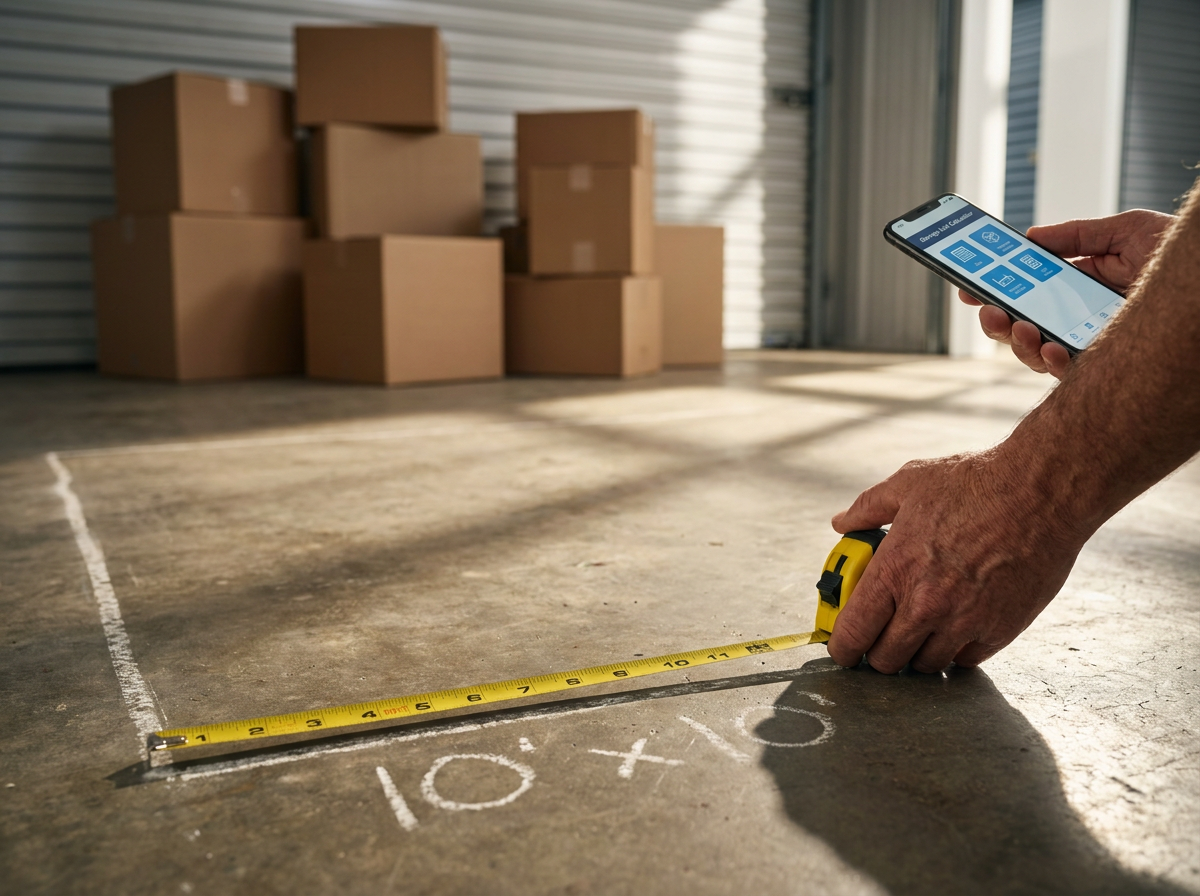
Use a tape measure to record length, width, and height of each major item in inches or feet. For furniture, measure the largest dimensions including any protruding elements like sofa arms or dresser handles. Create a spreadsheet listing each item with its dimensions and calculated cubic footage (L x W x H). Sum all cubic footage, add 25% for packing space, and divide by unit height to determine required square footage.
Choosing Between Two Storage Unit Sizes
When calculations place you between two sizes, consider these tiebreakers: storage duration, access frequency, item value, and budget constraints. Each factor can tip the decision toward the larger or smaller option.
| Factor | Choose Smaller If... | Choose Larger If... |
|---|---|---|
| Duration | Under 3 months | 6+ months |
| Access | Load once, unload once | Weekly or monthly visits |
| Item Value | Replaceable household items | Antiques, electronics, artwork |
| Packing Style | Uniform boxes, disassembled furniture | Assembled furniture, odd shapes |
| Budget | Cost is primary concern | Convenience is primary concern |
When genuinely uncertain, the larger size usually proves worthwhile. The monthly cost difference between adjacent sizes typically ranges from $20 to $50. Over a six-month rental, that amounts to $120 to $300 total. Compare this to the cost and hassle of upgrading mid-lease: transfer fees, moving labor, and potential damage during the second move often exceed the savings from starting smaller.
Storage Unit Sizes at Moab Self Storage
Moab Self Storage, located at 1081 S Main Street in Moab, Utah, offers drive-up storage units ranging from 5x10 to 10x30, plus covered vehicle parking with electrical hookups. As a locally owned and operated facility, the team provides personalized service 7 days a week to help you choose the right size.
Current availability includes:
- 5x10 Drive-up Units: $87.50/month, ideal for studio contents or recreation gear
- 10x10 Drive-up Units: $114.50/month, fits one-bedroom apartment or small business inventory
- 10x15 Drive-up Units: $139.50/month, accommodates two-bedroom apartment with appliances
- 10x20 Drive-up Units: $374/month, stores three-bedroom home or vehicle
- Covered Vehicle Parking: Protects cars, boats, and RVs from Moab's sun and weather
All units feature 24/7 access, digital video surveillance, and drive-up convenience on a fully paved lot. You can rent online in 60 seconds with immediate move-in, no deposit required, and month-to-month terms with no long-term commitment.
For questions about sizing or to discuss your specific storage needs, contact Moab Self Storage at (435) 222-0177 or email Help@LookingForStorage.com. The team serves residents throughout the Moab Valley, Spanish Valley, Castle Valley, La Sal, Thompson Springs, Crescent Junction, Dewey, and Cisco.
|