7 Benefits of Drive-Up Storage Units for Vehicles and Equipment |
| 7 BENEFITS OF DRIVE-UP STORAGE UNITS FOR VEHICLE AND EQUIPMENT STORAGE
⏱ 14 min read ·
📄 #2,736 words
Drive-up storage units offer ground-level access, faster loading, and better protection for vehicles and equipment. Learn the 7 key benefits for Moab storage.
|
D rive-up storage units provide ground-level, direct-access storage that eliminates hallways, elevators, and stairs when storing vehicles, trailers, ATVs, and heavy equipment. These units typically cost $87 to $374 per month depending on size, offer 24/7 access at many facilities, and protect your assets from weather, theft, and UV damage better than open lots or residential driveways.
| Key Points: | |
|---|---|
| • | Drive-up units allow you to park directly at your unit door, reducing loading time by 50% or more compared to interior units |
| • | 10x20 units ($374/month) fit most cars, trucks, and small trailers; 10x30 units accommodate larger vehicles and equipment combinations |
| • | Enclosed storage protects vehicles from Moab's intense UV exposure, dust storms, and temperature swings (20°F to 105°F annually) |
| • | Gated access, video surveillance, and individual unit locks reduce theft risk compared to open lots or street parking |
| • | Month-to-month leases provide flexibility for seasonal equipment, project-based storage, or temporary vehicle protection |
According to ConsumerAffairs research, approximately one in three Americans now uses self-storage, with drive-up units representing the most popular format for vehicle and equipment owners. The combination of convenience, security, and cost efficiency makes these units particularly valuable in regions like the Moab Valley, where outdoor recreation, tourism, and contractor work create year-round demand for flexible storage solutions.
1. Direct Vehicle Access Eliminates Loading Hassles
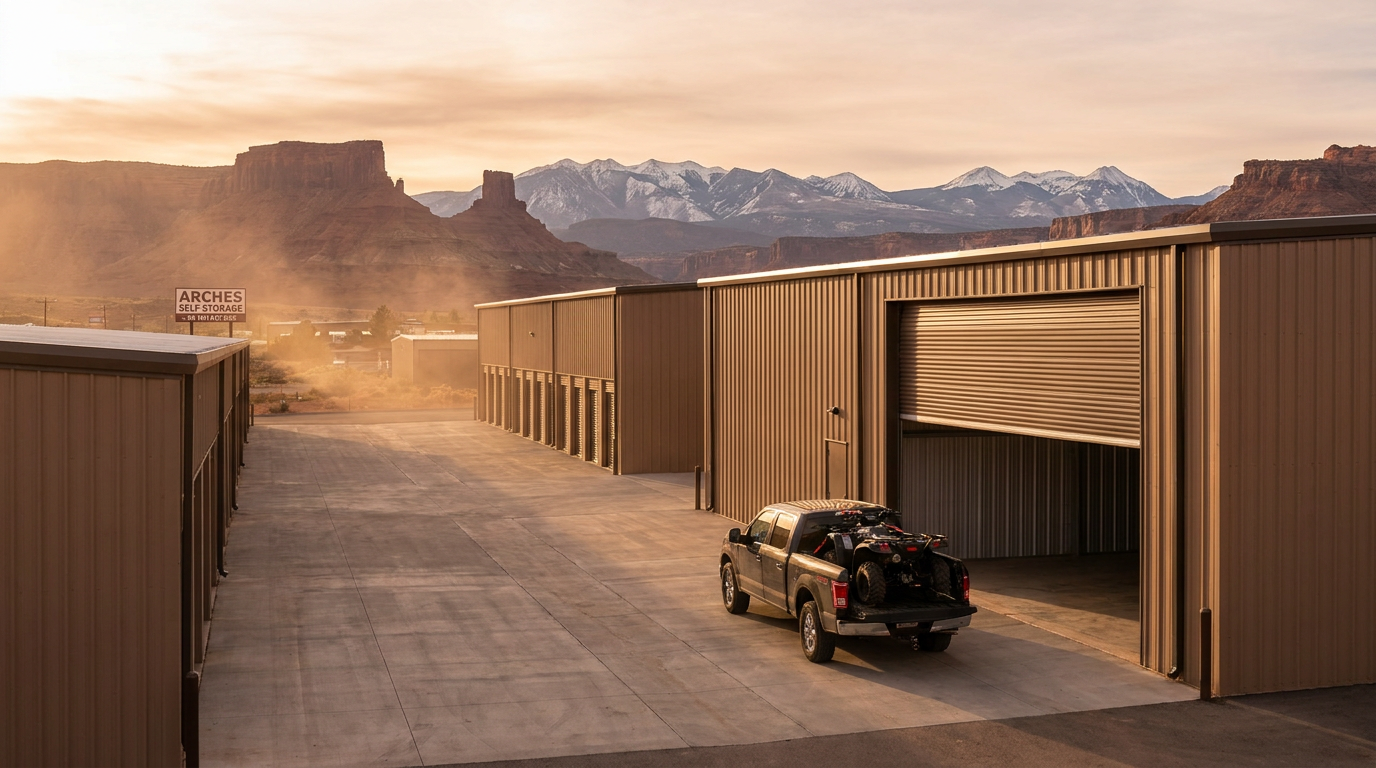
Drive-up storage units position your storage space at ground level with an exterior roll-up door, allowing you to back your truck, trailer, or tow vehicle directly to the entrance. This configuration eliminates the need to carry heavy items through corridors, navigate tight elevator spaces, or climb stairs with equipment. For vehicles that can fit through the door opening, you can drive them directly into the unit.
The practical impact is significant for equipment owners. A contractor loading a truck with power tools, compressors, and materials can complete the task in 10 to 15 minutes rather than 30 to 45 minutes required for an interior unit. According to Value Store It's vehicle storage guide, drive-up access "allows for quick and easy retrieval, saving you time and effort," which becomes especially valuable for users who access their units multiple times per week.
Standard door widths at most facilities range from 8 to 10 feet, accommodating passenger vehicles, motorcycles, ATVs, side-by-sides, and most single-axle trailers. Ceiling heights typically measure 8 to 10 feet, providing clearance for lifted trucks, roof racks, and taller equipment. Before renting, measure your largest vehicle or piece of equipment to confirm fit.
2. Significant Time and Labor Savings for Frequent Users
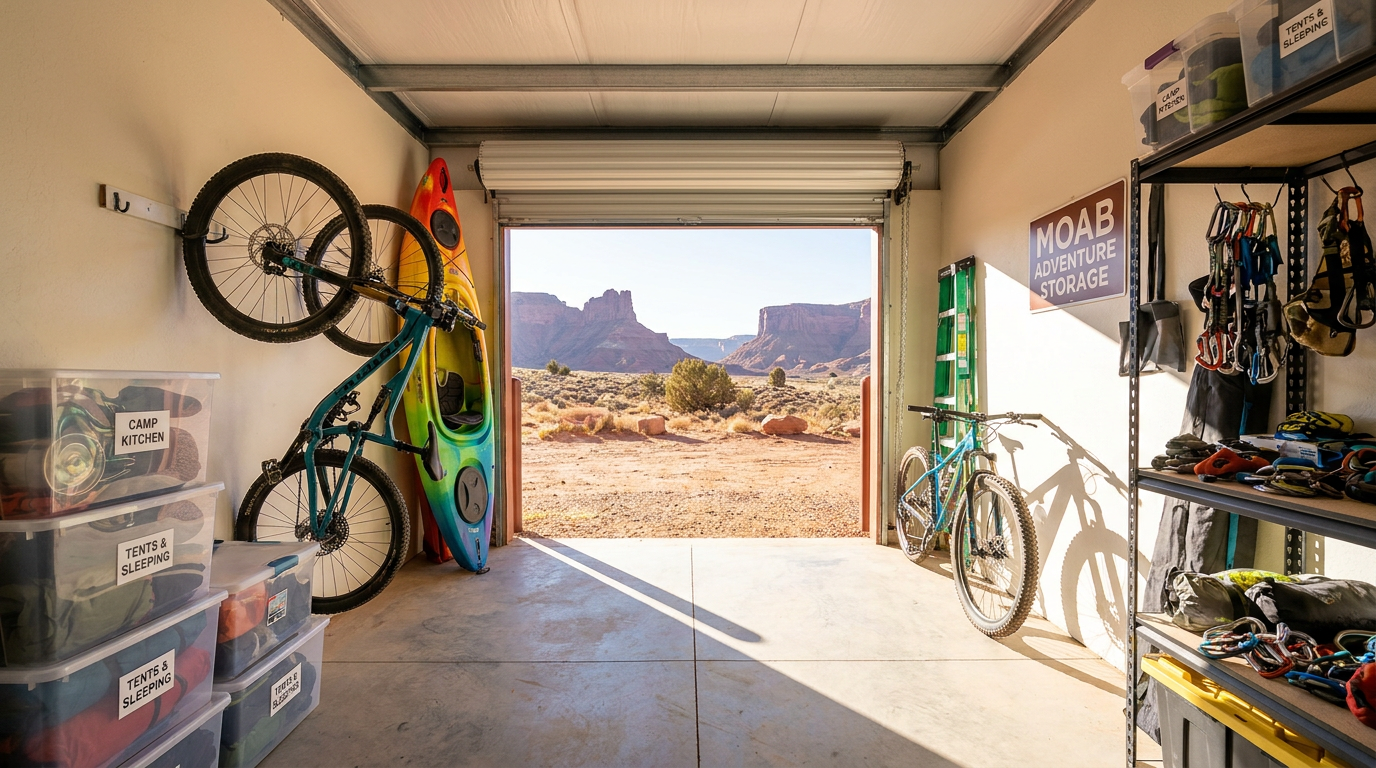
The time savings from drive-up access compound dramatically for business users, outdoor enthusiasts, and anyone accessing storage regularly. A rafting outfitter retrieving gear for a morning trip, a landscaper loading mowers at dawn, or a mountain biker grabbing equipment for an afternoon ride all benefit from the reduced handling time.
Consider the math for a contractor who accesses storage five times per week. If drive-up access saves 20 minutes per visit compared to an interior unit, that equals 100 minutes weekly, or roughly 86 hours annually. At a billable rate of $75 per hour, the time savings alone justify a premium of over $6,000 per year, far exceeding any price difference between unit types.
For Moab-area businesses serving tourists and outdoor recreation, the ability to load quickly before sunrise trips or unload efficiently after sunset returns creates genuine competitive advantage. Tour operators, bike rental shops, and climbing guides can stage equipment overnight and access it within minutes when clients arrive.
3. Superior Protection Compared to Open Lots and Driveways
Enclosed drive-up units shield vehicles and equipment from environmental damage that open parking cannot prevent. In the Moab Valley, this protection addresses several specific threats: intense UV radiation that degrades paint, plastics, and rubber; dust storms that scratch surfaces and infiltrate mechanical components; and temperature extremes ranging from below 20°F in winter to above 105°F in summer.
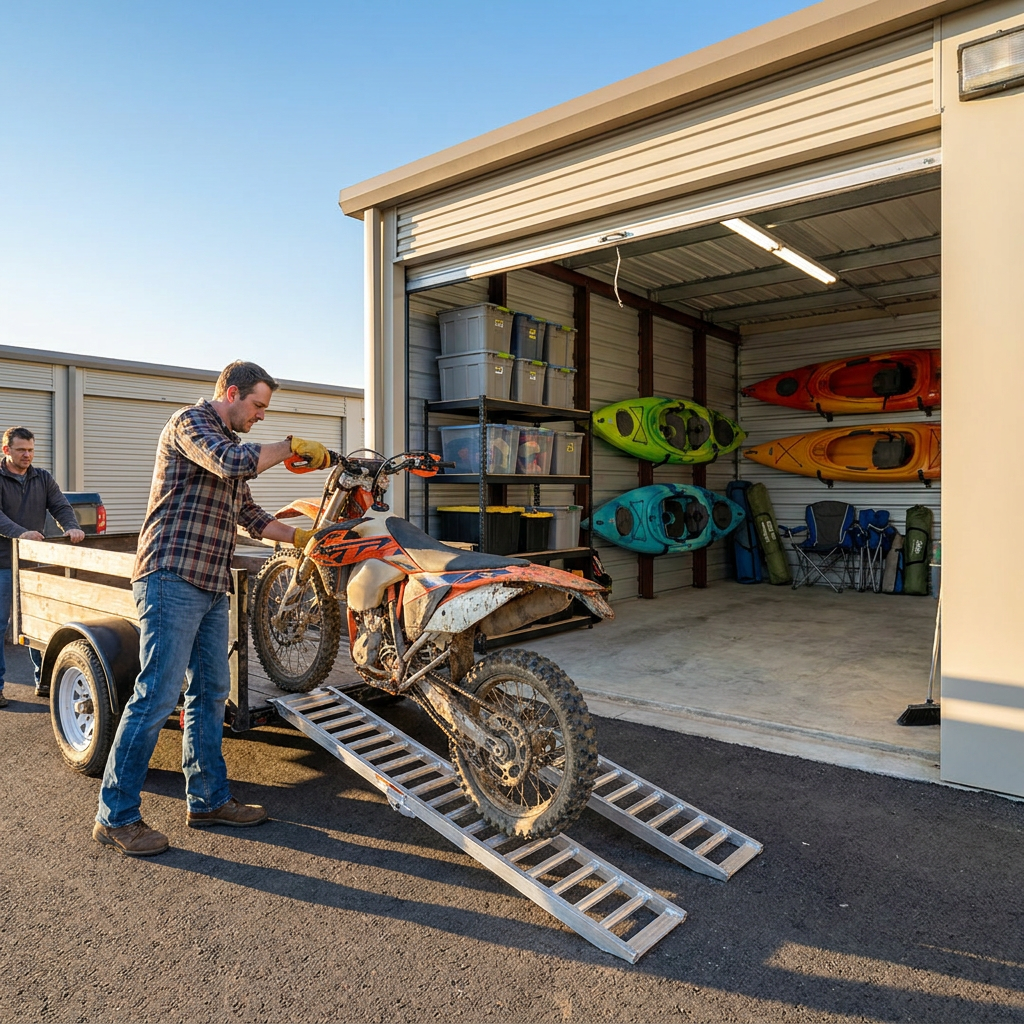
UV exposure causes particular damage to recreational vehicles and equipment. ATV plastics become brittle and crack, boat upholstery fades and deteriorates, and tire sidewalls develop dry rot when exposed to constant sunlight. An enclosed unit blocks 100% of direct UV exposure, potentially extending the useful life of these components by 3 to 5 years.
The protection extends to theft and vandalism prevention. According to Bolt Storage's security analysis, facilities with gated access, individual PIN codes, active video surveillance, and strong lighting are "meaningfully safer" than basic lots with minimal security. A vehicle behind a locked roll-up door is invisible to opportunistic thieves who might target visible equipment in open lots or residential driveways.
Environmental Protection Comparison
| Threat | Open Lot | Covered Parking | Drive-Up Unit |
|---|---|---|---|
| UV Damage | Full exposure | Partial protection | Complete protection |
| Dust and Debris | Full exposure | Partial protection | Complete protection |
| Rain and Snow | Full exposure | Complete protection | Complete protection |
| Theft Visibility | Fully visible | Fully visible | Hidden from view |
| Temperature Extremes | Full exposure | Minimal protection | Moderate protection |
4. Cost-Effective Alternative to Larger Property
Renting a drive-up storage unit typically costs far less than alternatives like leasing commercial space, expanding your property, or paying for dedicated vehicle storage facilities. According to ConsumerAffairs, the average storage unit cost in the United States runs approximately $16.30 per square foot annually, though prices vary significantly by location, size, and features.
For perspective, a 10x20 drive-up unit provides 200 square feet of enclosed, secure space for vehicle and equipment storage. Leasing equivalent commercial or warehouse space in most markets would cost 2 to 4 times more per square foot, plus require longer lease commitments, utility payments, and maintenance responsibilities. Residential property expansion through garage additions typically costs $20,000 to $50,000 or more.
The financial case becomes even stronger when considering flexibility. Month-to-month rental terms allow you to scale storage up during busy seasons and eliminate the expense during slow periods. A landscaping business might rent a 10x30 unit from March through November, then downsize or cancel during winter months when equipment sits idle.
5. Flexible Unit Sizes Match Diverse Storage Needs
Drive-up storage facilities typically offer multiple unit sizes, allowing you to match your space requirements precisely rather than paying for unused capacity. Common configurations range from 5x10 units (50 square feet) suitable for motorcycles and small equipment, up to 10x30 units (300 square feet) that accommodate full-size trucks, boats, and multiple pieces of equipment.
Choosing the right size requires measuring your largest items and planning for access space. A general guideline: select a unit at least 2 feet wider than your widest vehicle or piece of equipment to allow door clearance and walking room. For combination storage (vehicle plus tools and supplies), add 25% to 50% more space than the vehicle alone requires.
Unit Size Selection Guide for Vehicles and Equipment
| Unit Size | Square Feet | Typical Uses | Price Range |
|---|---|---|---|
| 5x10 | 50 sq ft | Motorcycles, small ATVs, lawn equipment | $85-$120/month |
| 10x10 | 100 sq ft | Full-size ATVs, multiple motorcycles, small trailers | $110-$150/month |
| 10x15 | 150 sq ft | Side-by-sides, jet skis, compact cars | $135-$175/month |
| 10x20 | 200 sq ft | Full-size vehicles, boats up to 18 feet, equipment trailers | $200-$400/month |
| 10x30 | 300 sq ft | Large trucks, boats up to 25 feet, vehicle plus equipment | $300-$500/month |
Our storage unit size guide provides detailed dimensions and recommendations for specific vehicle types, helping you select the right unit without paying for wasted space.
6. Enhanced Security Features Protect Valuable Assets
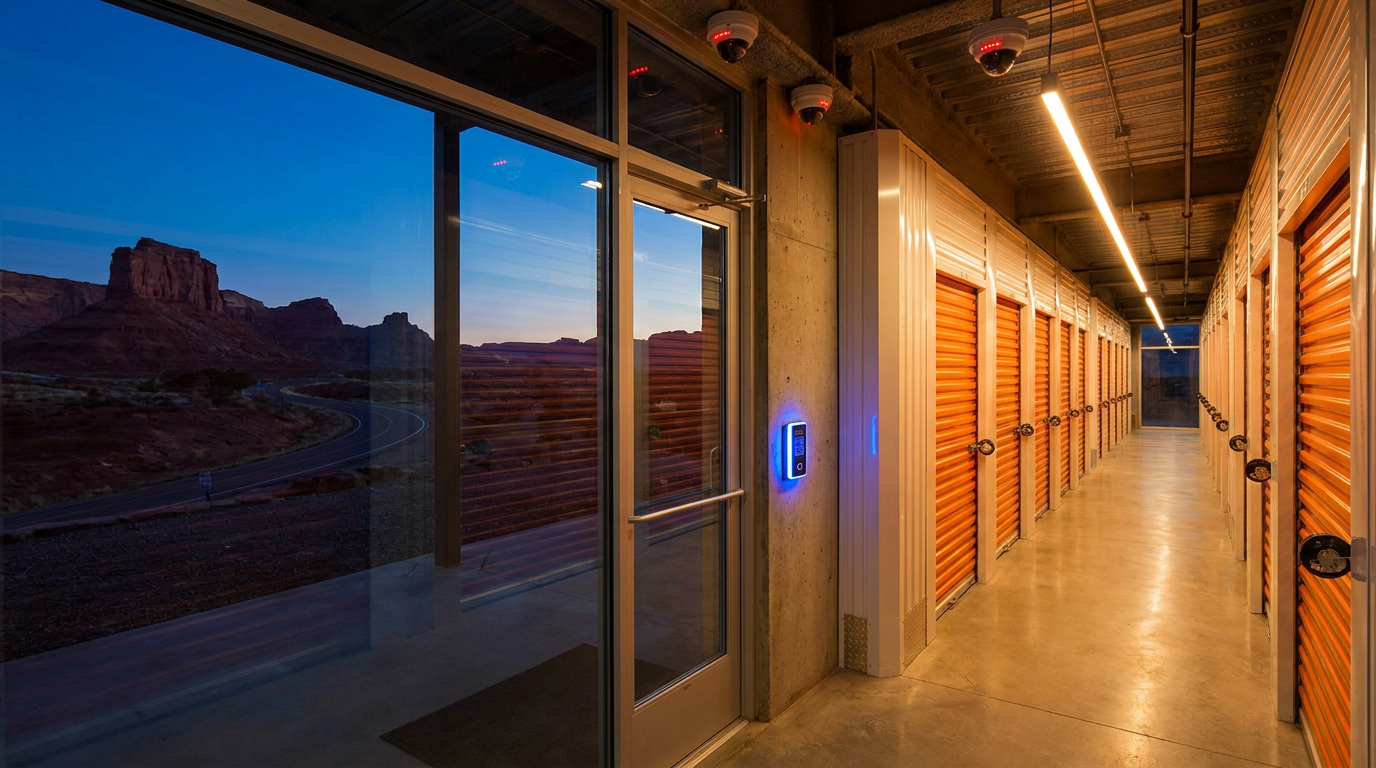
Modern drive-up storage facilities incorporate multiple security layers that collectively reduce theft and damage risk. Key features to evaluate include perimeter fencing with controlled gate access, individual unit alarms, digital video surveillance with recording capability, adequate lighting throughout the property, and on-site or responsive management.
The lock you choose matters significantly. Security experts recommend disc locks (also called disc padlocks or puck locks) for storage units because their enclosed shackle design resists bolt cutters and prying tools. Standard padlocks with exposed shackles can be defeated in seconds with basic tools, making them inadequate for protecting valuable vehicles and equipment.
According to Bolt Storage's analysis, well-run facilities combining gated access, individual PIN codes, active video surveillance, and strong lighting provide meaningfully better protection than basic lots. When evaluating facilities, ask specific questions: How many cameras monitor the property? Is footage recorded and retained? What happens if the gate system fails? Are units individually alarmed?
For additional protection, consider a tenant protection plan that covers burglary, fire, water damage, and other risks. Standard homeowner's or renter's insurance policies often exclude items stored off-premises, leaving a coverage gap that tenant protection addresses.
7. 24/7 Access Accommodates Any Schedule
Many drive-up storage facilities offer extended or round-the-clock access, transforming your unit into an always-available equipment depot or secondary garage. This flexibility proves essential for users whose schedules do not align with standard business hours: contractors starting jobs at 6 AM, tour operators returning equipment after sunset, or travelers arriving late at night.
According to Vail Airport Storage's facility guide, 24/7 access combined with electrical hookups allows users to maintain battery tenders, trickle chargers, and other equipment that keeps vehicles ready for immediate use. This capability is particularly valuable for seasonal vehicles that might otherwise suffer battery drain during extended storage periods.
The combination of drive-up access and 24/7 availability creates genuine operational flexibility. You can retrieve a boat for a spontaneous weekend trip, load construction equipment before dawn to beat traffic, or unload gear after a late return from the backcountry. The storage unit functions as an extension of your workspace rather than a static warehouse requiring advance planning.
Preparing Vehicles and Equipment for Storage
Proper preparation before storing vehicles and equipment prevents damage and ensures everything works correctly when retrieved. The specific steps vary by item type, but several principles apply universally: clean items before storage, address fluid and fuel considerations, protect against pests, and maintain batteries during extended storage.
Vehicle Storage Preparation Checklist
For cars, trucks, and motorcycles:
- Wash and wax exterior surfaces to prevent dirt from bonding to paint
- Clean interior thoroughly and remove any food items
- Fill fuel tank and add fuel stabilizer for storage exceeding 30 days
- Check and top off all fluids (oil, coolant, brake fluid, transmission fluid)
- Inflate tires to maximum recommended pressure to prevent flat spots
- Connect battery tender or disconnect battery for storage exceeding 2 weeks
- Place moisture absorbers inside vehicle to prevent mold and mildew
- Cover with breathable fabric cover (avoid plastic, which traps moisture)
For boats and watercraft:
- Flush engine with fresh water and drain completely
- Add fuel stabilizer and run engine briefly to circulate
- Remove drain plugs and ensure all water drains from hull and systems
- Clean and treat upholstery with UV protectant
- Remove electronics and valuables if possible
- Cover with fitted cover or quality tarp secured against wind
For ATVs, side-by-sides, and recreational vehicles:
- Clean thoroughly, paying attention to undercarriage and wheel wells
- Stabilize fuel and run engine to circulate treated fuel
- Lubricate cables, chains, and pivot points
- Check tire pressure and consider tire cradles for long-term storage
- Disconnect or maintain battery with tender
Frequently Asked Questions
Are drive-up storage units good for vehicle storage?
Drive-up units are among the best options for vehicle storage because they allow direct access without navigating hallways or elevators. You can drive vehicles directly into appropriately sized units, and the enclosed space protects against weather, UV damage, and theft. For vehicles that cannot fit inside (large RVs, commercial trucks), covered parking spaces offer similar convenience with overhead protection.
What size drive-up storage unit do I need for a car or truck?
Most passenger cars and standard pickup trucks fit in a 10x20 unit (200 square feet), which provides approximately 20 feet of length and 10 feet of width. Compact cars may fit in 10x15 units. Extended cab trucks, full-size SUVs, and vehicles with trailers typically require 10x30 units. Always measure your specific vehicle and confirm unit dimensions before renting.
How secure are drive-up storage units for tools and equipment?
Security varies significantly between facilities. Look for properties with perimeter fencing, controlled gate access requiring individual codes, digital video surveillance with recording, adequate lighting, and responsive management. Use a disc lock rather than a standard padlock, as disc locks resist cutting and prying. Consider tenant protection coverage for high-value equipment.
Can I use a trickle charger or battery tender in a storage unit?
Some facilities offer units with electrical outlets that allow battery tenders, trickle chargers, and other low-draw electrical devices. Ask specifically about electrical availability and any restrictions before renting. If electricity is not available, disconnect batteries for storage exceeding 2 weeks, or plan to visit periodically to run vehicles and maintain charge.
Is it cheaper to store a vehicle in a drive-up unit or pay for outdoor parking?
Outdoor parking typically costs less per month (often $50 to $150 compared to $200 to $400 for enclosed units), but provides minimal protection from weather, UV damage, and theft. The cost difference may be offset by reduced maintenance, longer component life, and lower insurance risk with enclosed storage. Evaluate based on vehicle value, storage duration, and local climate conditions.
What items are NOT allowed in a storage unit?
Prohibited items typically include flammable materials (gasoline, propane, solvents), explosives, perishable food, living things (plants, animals), hazardous chemicals, and illegal items. Vehicles should have minimal fuel (quarter tank or less unless using stabilizer), and propane tanks on RVs or equipment must be empty. Check your facility's specific rules before storing.
How do I prepare my vehicle or equipment for long-term storage?
Key preparation steps include thorough cleaning, fluid maintenance (top off or drain depending on item), fuel stabilization for gas engines, battery maintenance (tender connection or disconnection), tire inflation to maximum pressure, pest prevention, and moisture control. The specific checklist varies by vehicle type; see the detailed preparation section above for item-specific guidance.
Choosing the Right Drive-Up Storage Facility
Not all drive-up storage facilities offer equivalent value. When evaluating options, consider location convenience, security features, access hours, unit sizes available, pricing structure, and lease flexibility. A facility 5 minutes from your home or job site provides significantly more practical value than one 30 minutes away, even at a lower monthly rate.
Visit facilities in person before committing. Observe the property condition: Is it clean and well-maintained? Are driveways paved and wide enough for easy maneuvering? Do security cameras appear functional and well-positioned? Is lighting adequate for evening access? These details indicate management quality and predict your experience as a tenant.
Ask about lease terms and fees. Month-to-month agreements provide maximum flexibility, while longer commitments may offer rate discounts. Clarify any administrative fees, late payment policies, and move-out requirements. Understand what happens if you need to change unit sizes or terminate early.
For answers to common questions about renting, payments, and access, visit our frequently asked questions page. If you prefer to see the facility before deciding, our photos and video tour show the property layout, unit types, and security features.
Why Moab Residents and Visitors Choose Drive-Up Storage
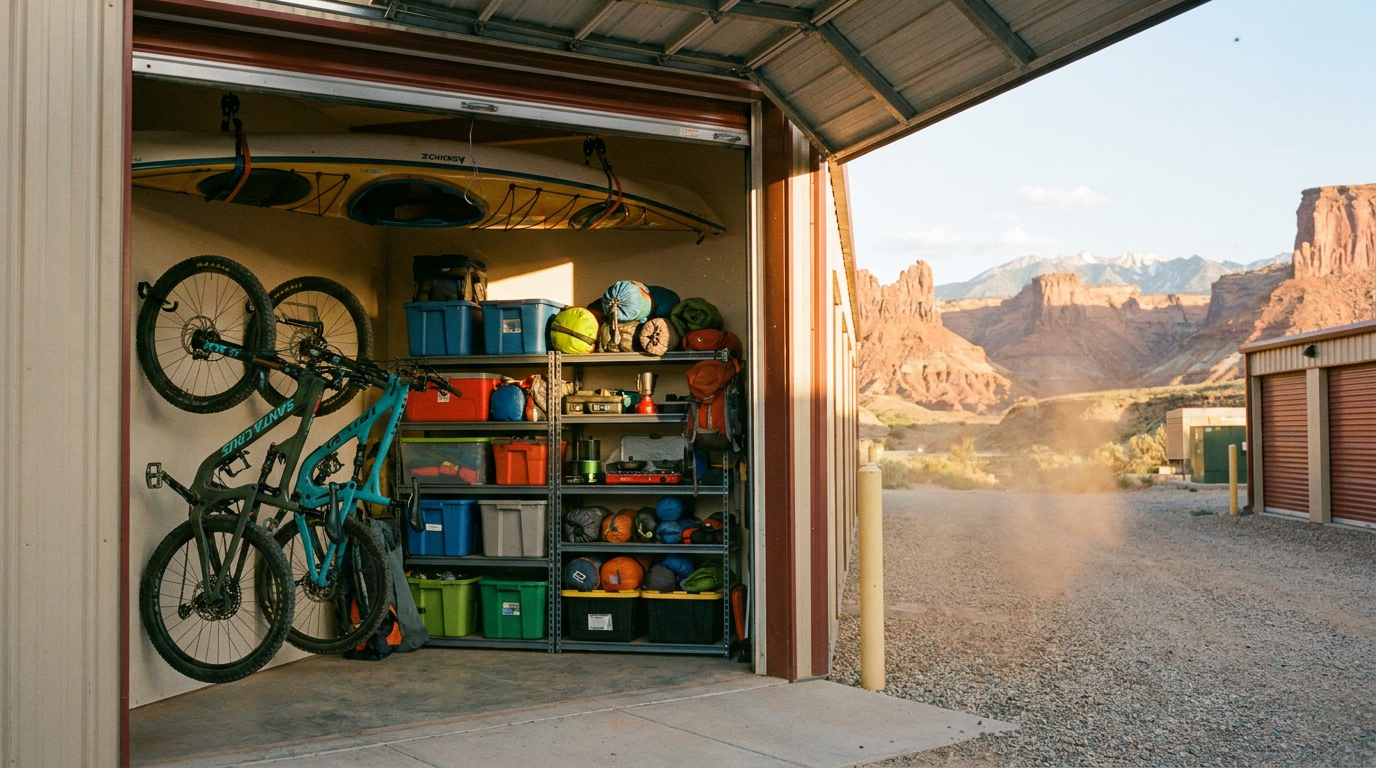
The Moab Valley presents unique storage challenges that drive-up units address effectively. The region's outdoor recreation economy means residents and visitors accumulate vehicles and equipment: Jeeps and 4x4s for trail riding, boats and jet skis for Lake Powell trips, mountain bikes and climbing gear, rafting equipment, and seasonal recreational vehicles.
Local climate conditions make enclosed storage particularly valuable. Summer temperatures regularly exceed 100°F, accelerating UV damage to exposed vehicles. Winter brings occasional snow and consistent cold that can damage batteries and fluids in unprotected equipment. Dust from unpaved roads and desert winds infiltrates mechanical systems left in open storage.
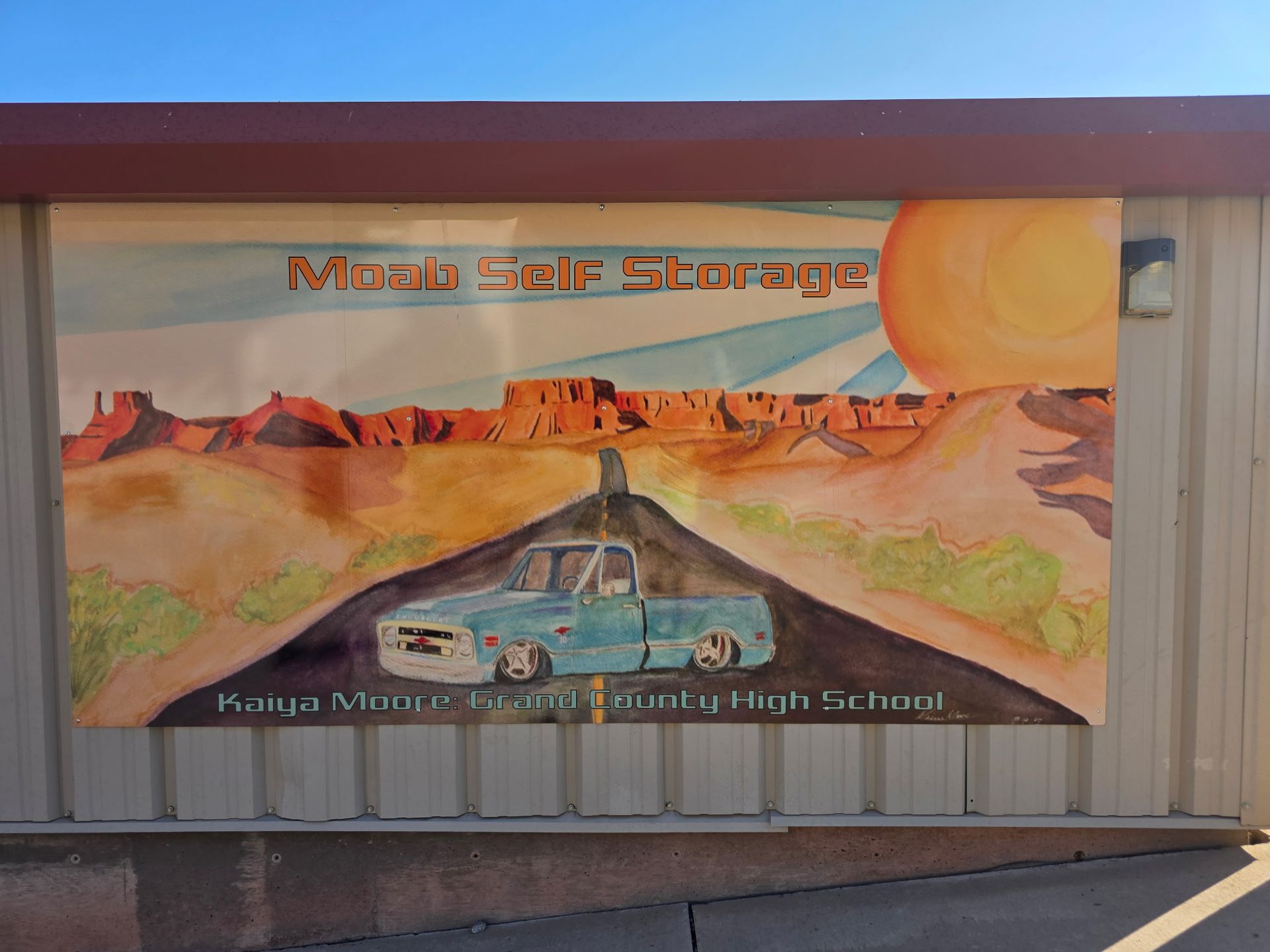
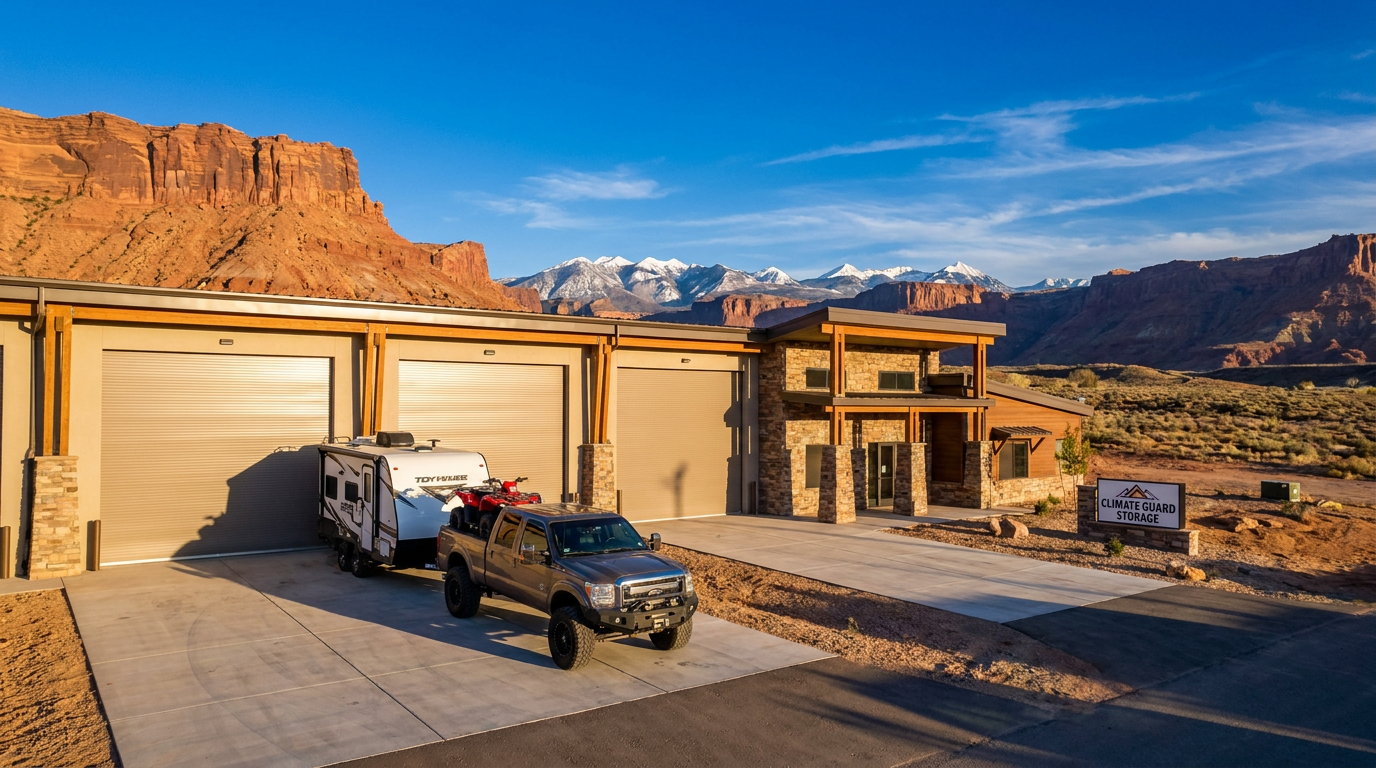
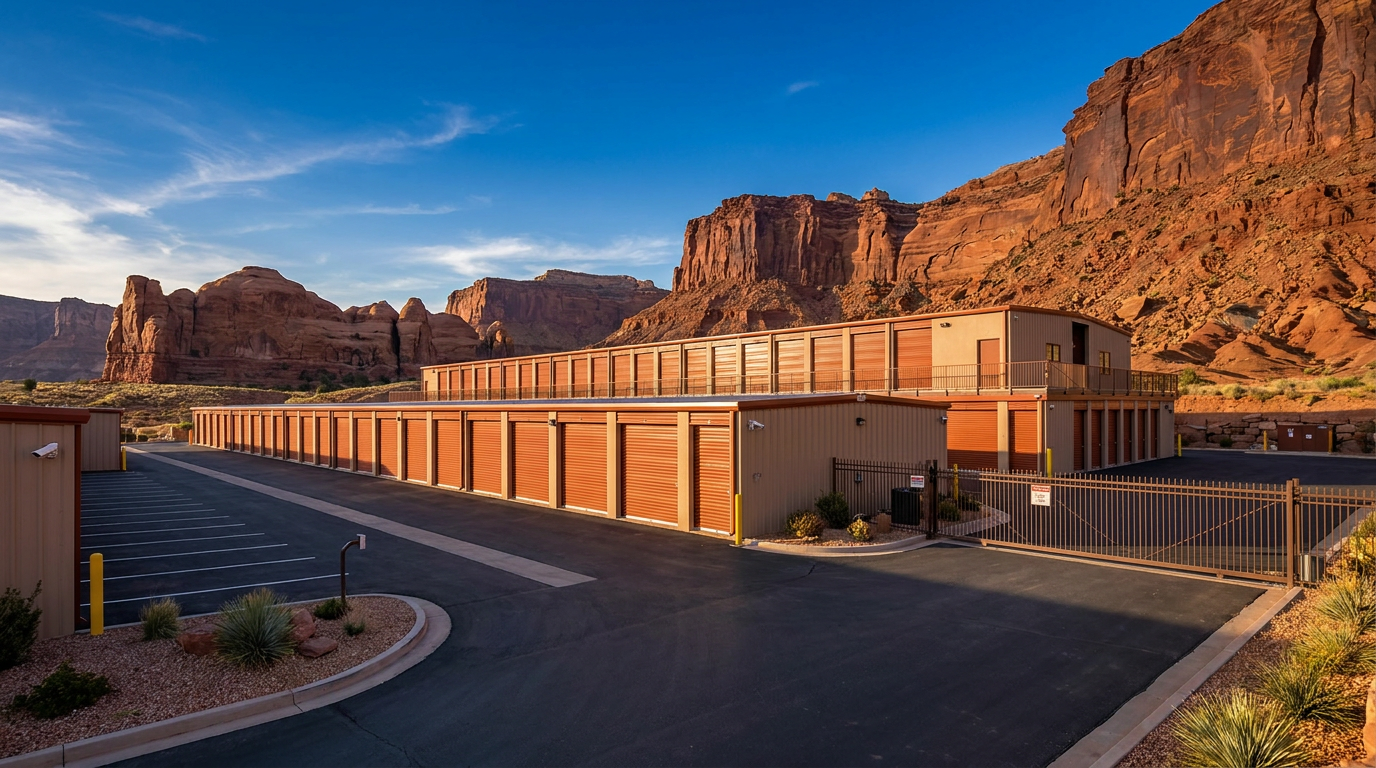
As a locally owned and operated storage facility, Moab Self Storage understands these regional needs. Our fully paved facility at 1081 S Main Street offers drive-up units from 5x10 to 10x30, plus covered vehicle parking with electrical hookups for battery maintenance. Digital video surveillance and controlled gate access provide security, while 24/7 access accommodates the unpredictable schedules of outdoor adventures and seasonal work.
Whether you need space for a project vehicle, seasonal equipment storage, or a secure location for business tools and inventory, drive-up units provide the combination of convenience, protection, and flexibility that makes storage practical rather than burdensome. Contact us by phone at (435) 222-0177 or email at Help@LookingForStorage.com with questions about specific storage needs.
|