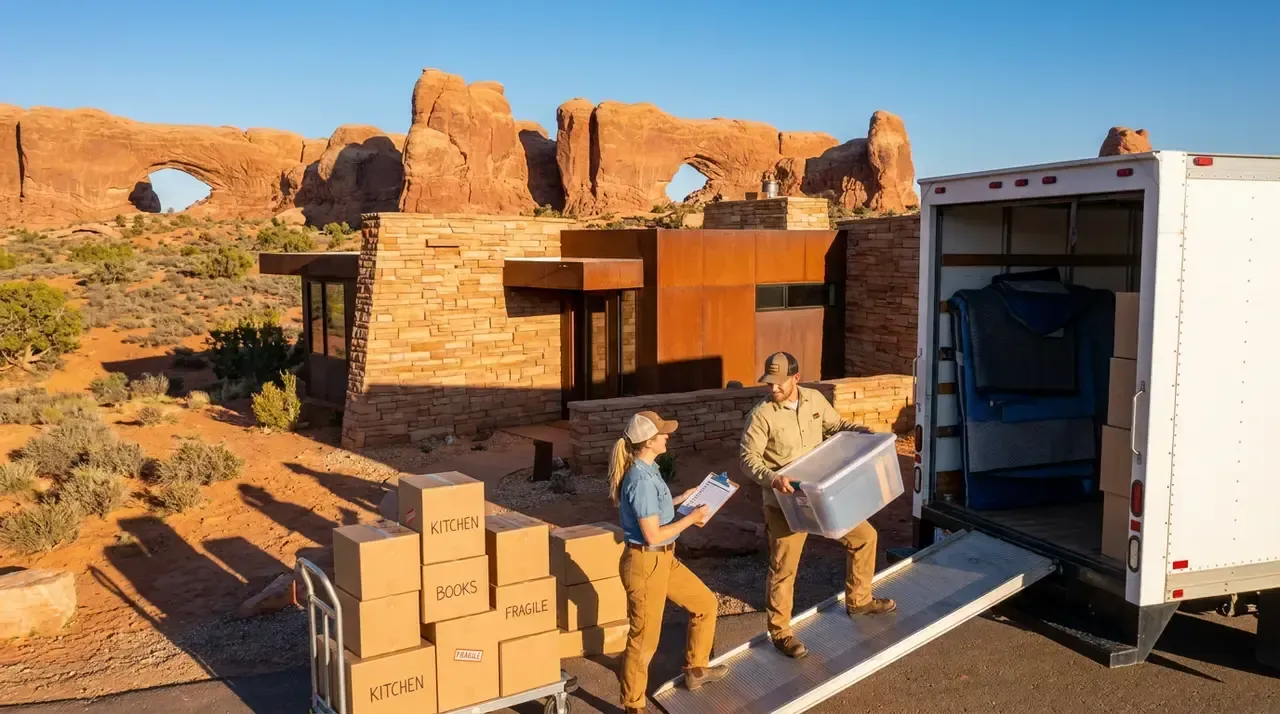
M oving in Moab requires a 6 to 8 week planning timeline, separate checklists for renters versus homeowners, and often temporary storage to bridge gaps between lease dates or closing schedules. The desert climate, seasonal tourism peaks, and limited local moving resources make early preparation essential for a successful transition in Grand County.
| Key Points: | |
|---|---|
| • | Start planning 6 to 8 weeks before your move date to secure movers and storage during peak tourist season (March through October) |
| • | Renters must provide 30 days written notice and document unit condition; homeowners need 45 to 60 days for closing coordination |
| • | Storage units in Moab range from $87.50 to $374 per month depending on size, with drive-up access simplifying heavy item loading |
| • | Summer temperatures exceeding 100 degrees Fahrenheit require heat-sensitive items like electronics and candles to be moved early morning or stored properly |
| • | Photograph every room before moving out to protect your security deposit or document home sale condition |
Why Moab Moves Often Require Storage
Moab's housing market operates differently than larger Utah cities like Salt Lake City or Provo. According to Realtor.com listings for Moab, the area has limited inventory with homes and rentals turning over quickly during peak seasons. This creates timing gaps where your old lease ends before your new home is ready, or your home sale closes before you can move into your next property.
The Moab Valley serves residents from Spanish Valley, Castle Valley, La Sal, Thompson Springs, Crescent Junction, Dewey, and Cisco. Many families relocating within this region need 2 to 4 weeks of storage to bridge transition periods. Second-home owners and seasonal workers face similar challenges when coordinating moves around tourism schedules.
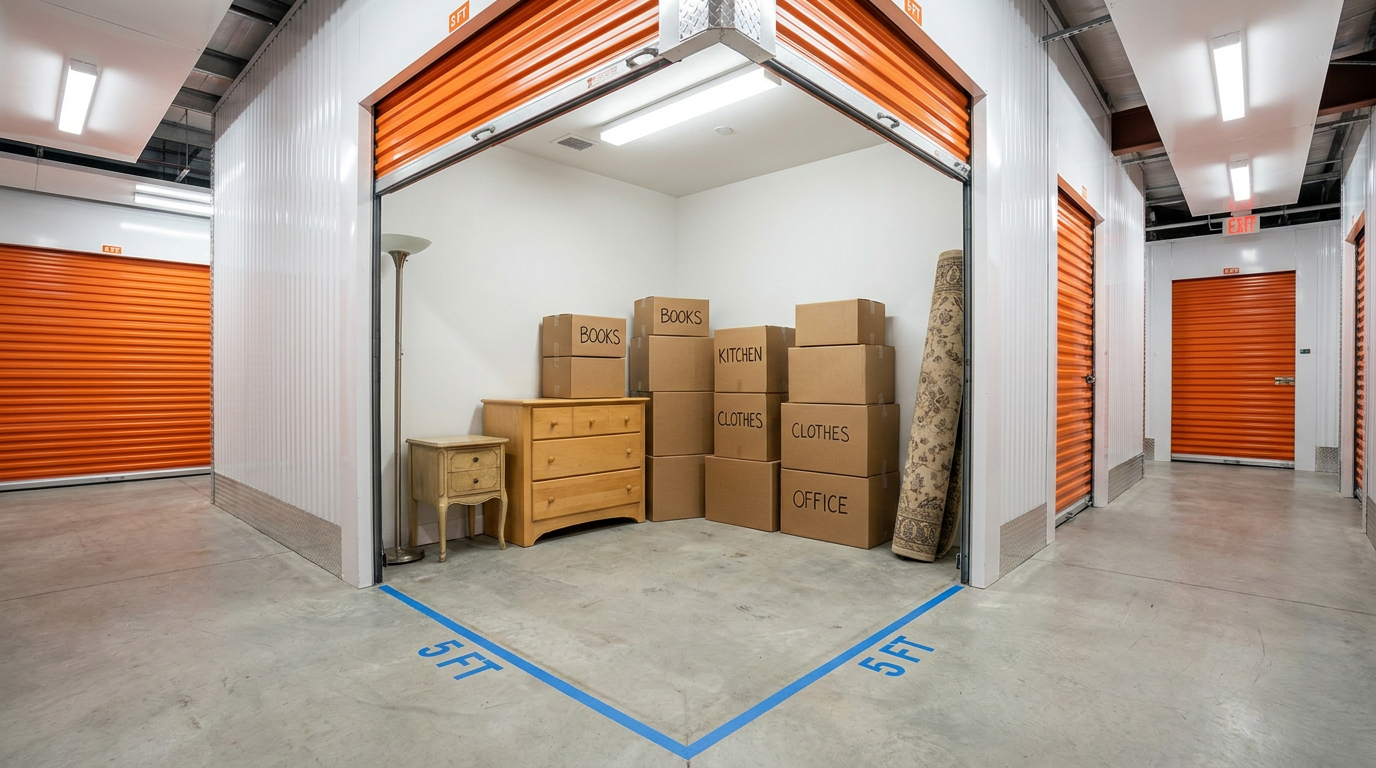
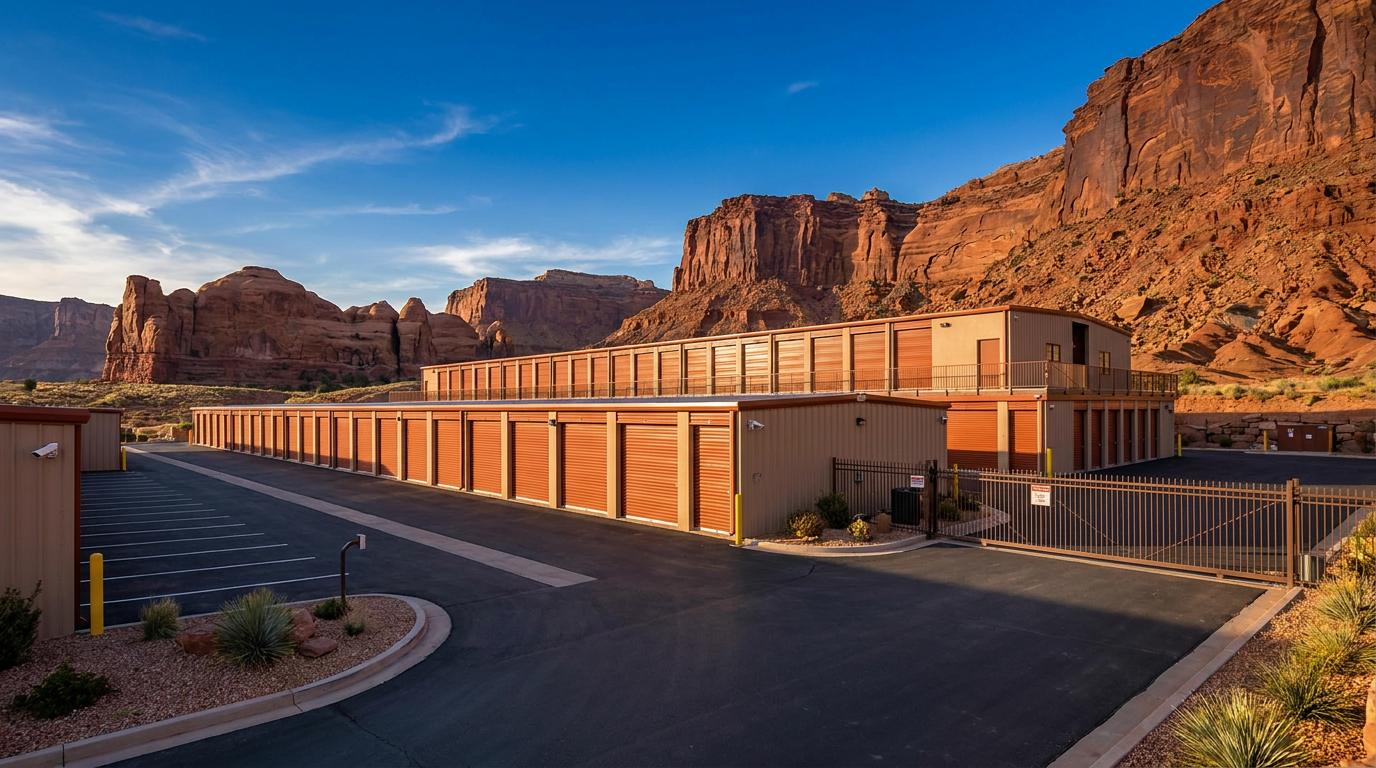
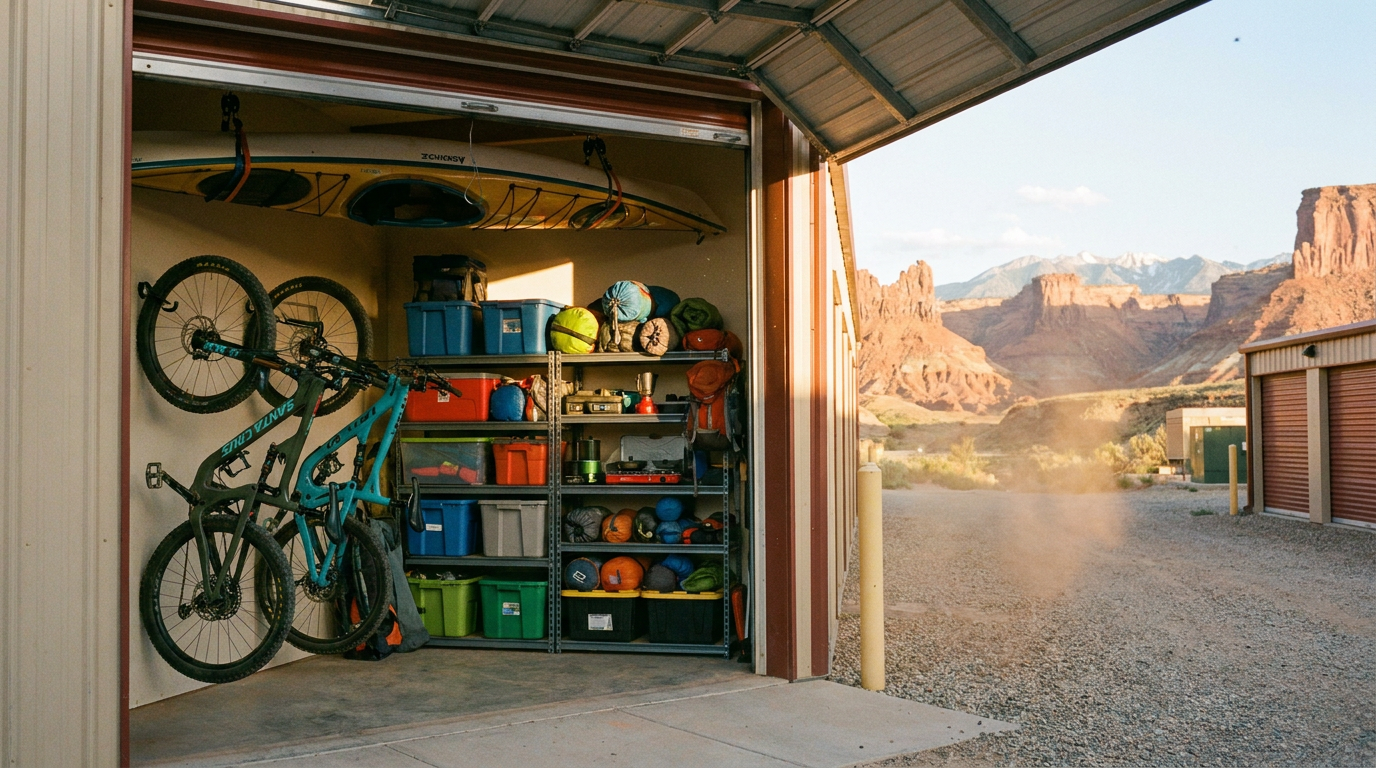
Drive-up storage units eliminate the need for loading docks or elevators, which matters when you are handling heavy outdoor gear, furniture, or equipment common to Moab households. A storage unit size guide helps determine whether a 5x10 unit at $87.50 per month or a larger 10x20 space at $374 per month fits your needs.
Complete Renter Moving Checklist for Moab
Renters in Moab face specific requirements that homeowners do not. Utah landlord-tenant law requires written notice, and most Moab leases specify 30 days minimum. Missing this deadline can cost you an additional month of rent, typically $1,200 to $2,400 for a Moab apartment or rental home.
6 to 8 Weeks Before Moving
Review your lease agreement for the exact notice period and move-out requirements. Many Moab property managers require professional carpet cleaning, which costs $150 to $300 for a 2-bedroom unit. Submit your written notice via certified mail or email with delivery confirmation to create a paper trail.
Request a pre-move-out inspection from your landlord. Utah law allows tenants to identify issues before the final walkthrough, giving you time to make repairs and protect your security deposit. According to FreightWaves Checkpoint moving guidance, documenting the property condition with dated photographs prevents disputes later.
Contact your renter's insurance provider to confirm coverage during the move. Most policies cover belongings in transit, but gaps may exist. The average renter's insurance policy costs $15 to $30 monthly in Utah and typically covers theft, fire, and water damage during relocation.
4 to 5 Weeks Before Moving
Book moving help early if relocating during March through October. Moab's population swells with tourists during these months, and local moving assistance becomes scarce. Independent movers in Grand County typically charge $80 to $150 per hour for a two-person crew.
Begin decluttering room by room. Donate usable items to Moab's Community Recycling Center or local thrift stores. Selling furniture on Moab-area Facebook groups often works faster than traditional marketplaces due to the tight-knit community.
Reserve a storage unit if your move-in date does not align with your move-out date. Month-to-month rentals with no deposit required allow flexibility without long-term commitment. Visit our frequently asked questions page for details on the rental process.
2 to 3 Weeks Before Moving
Schedule utility disconnection for the day after your move-out date. Rocky Mountain Power requires 3 to 5 business days notice. Dominion Energy serves natural gas customers and needs similar lead time. Update your address with USPS, which takes 7 to 10 days to process fully.
Gather packing supplies including boxes, tape, bubble wrap, and markers. Moab's City Market and local hardware stores stock moving supplies, though selection is limited compared to larger cities. Order specialty boxes for dishes, mirrors, or electronics online if needed.
Create a room-by-room packing schedule. The kitchen typically takes 8 to 12 hours to pack properly. Bedrooms average 3 to 5 hours each. Start with rooms you use least frequently, such as guest bedrooms or storage closets.
1 Week Before Moving
Photograph every room, wall, floor, and appliance in your rental unit. Take close-up shots of any existing damage and wide-angle photos showing overall condition. Store these images in cloud storage with timestamps as evidence for deposit disputes.
Confirm your moving help, truck rental, or storage reservation. Verify the pickup time, location, and any access codes needed. Pack an essentials box containing toiletries, medications, phone chargers, important documents, and 2 to 3 days of clothing.
Clean the refrigerator, oven, and bathrooms thoroughly. Many Moab landlords charge $200 to $400 for professional cleaning if the unit is not left in move-in condition. Focus on areas inspectors check most closely: baseboards, light fixtures, window tracks, and inside cabinets.
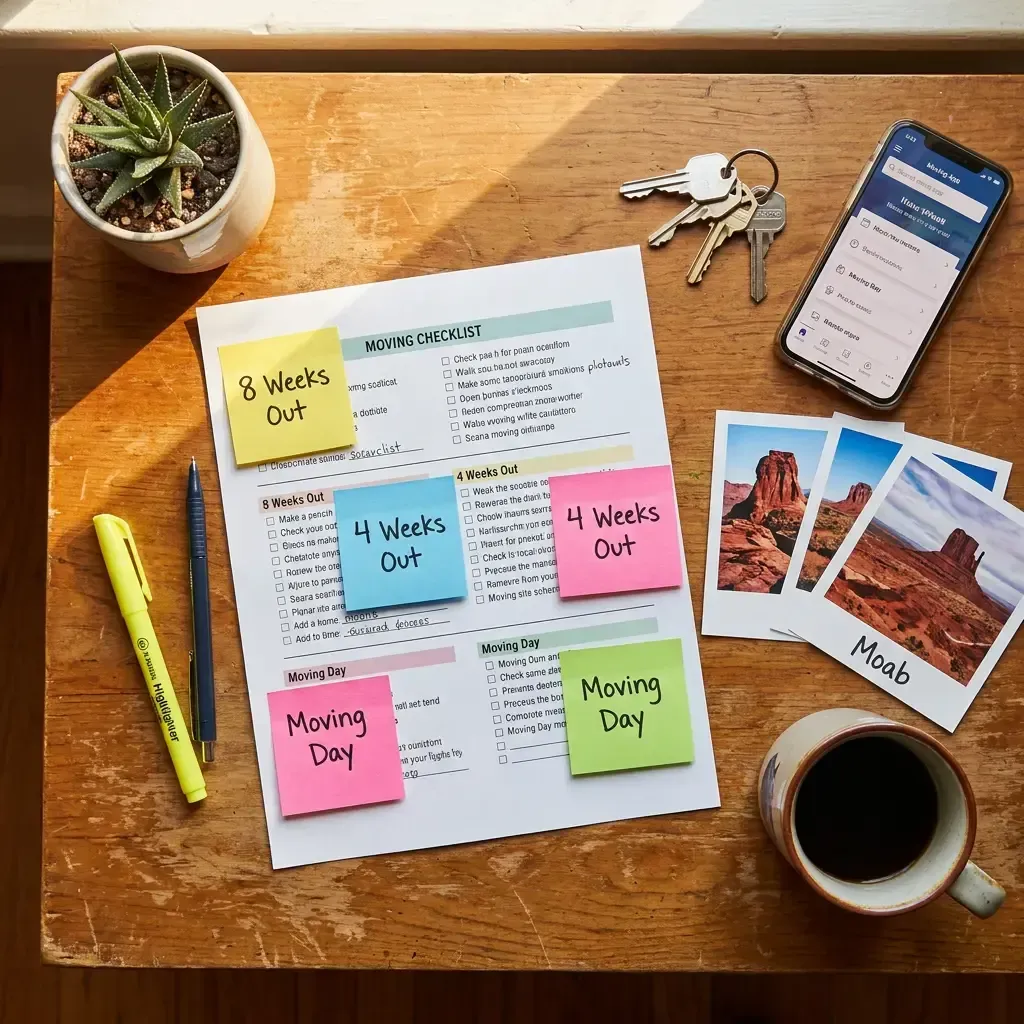
Complete Homeowner Moving Checklist for Moab
Homeowners face additional complexity around closing dates, title transfers, and coordinating with buyers or sellers. The average Moab home sale takes 45 to 90 days from listing to closing, creating uncertainty about exact move dates.
8 to 10 Weeks Before Closing
Confirm your closing date with your real estate agent and title company. Grand County title searches occasionally reveal issues requiring additional time to resolve. Build 1 to 2 weeks of buffer into your moving timeline to account for delays.
Review your homeowner's insurance policy for coverage during the move. According to Move.org's homeowner checklist, standard policies may not cover items in transit or in storage. Contact your insurer to add a rider or consider a tenant protection plan for stored belongings.
Begin sorting items into categories: keep, sell, donate, and dispose. Homeowners typically accumulate 30 to 50 percent more belongings than renters due to longer residence periods. Garage sales work well in Moab during spring and fall weekends when tourist traffic brings additional buyers.
6 to 7 Weeks Before Closing
Obtain quotes from at least three moving companies if hiring professionals. Long-distance moves from Moab to Salt Lake City (approximately 235 miles) typically cost $1,500 to $3,500 depending on home size and services. Local moves within Grand County range from $400 to $1,200.
Schedule home repairs required by your sales contract. Buyers often request fixes identified during inspection, and completing these before moving out simplifies the process. Common Moab inspection issues include evaporative cooler maintenance, water heater age, and exterior weathering from desert conditions.
Transfer or cancel home services including landscaping, pest control, propane delivery, and security monitoring. Many Moab homes use propane for heating, and tank ownership versus rental affects transfer procedures.
4 to 5 Weeks Before Closing
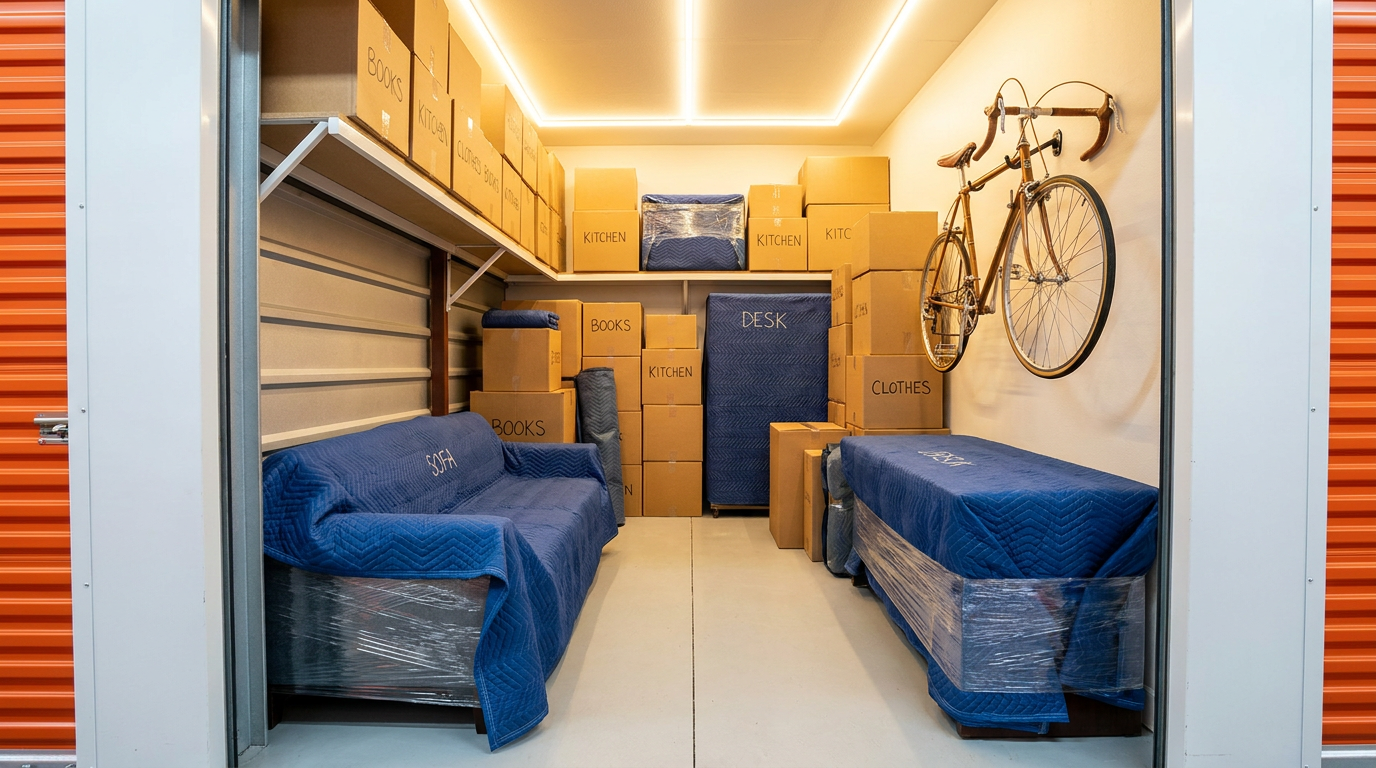
Pack non-essential items and seasonal belongings first. Winter gear, holiday decorations, and rarely used kitchen appliances can go into storage early. This reduces stress during the final weeks and confirms your storage unit size is adequate.
Arrange for mail forwarding and update your address with financial institutions, employers, insurance companies, and subscription services. The Social Security Administration, IRS, and Utah DMV each have separate address change processes.
Coordinate utility transfers with your buyer. Moab's small-town infrastructure means utility companies prefer direct handoffs rather than service gaps. Schedule your final readings for the day after closing to avoid billing disputes.
2 to 3 Weeks Before Closing
Complete a final walkthrough of your home with your real estate agent. Document the condition with photographs and video in case disputes arise after closing. Note any items you agreed to leave for the buyer, such as appliances or window treatments.
Gather all keys, garage door openers, gate codes, and security system information to transfer at closing. Create a home manual for the new owners including appliance warranties, contractor contacts, and maintenance schedules.
Confirm your storage access requirements. As a locally owned storage facility, Moab Self Storage offers 24/7 access, which helps when closing dates shift unexpectedly or you need to retrieve items outside business hours.
Storage Checklist: What to Store vs. Move Immediately
Not everything should go directly to your new home. Strategic use of storage reduces chaos during move-in and protects items that need special handling.
| Store First | Move Directly | Reason |
|---|---|---|
| Seasonal clothing and gear | Current season essentials | Reduces unpacking volume |
| Backup furniture | Primary beds, tables, seating | Assess new space before placing extras |
| Holiday decorations | Daily-use items | Not needed for 6+ months |
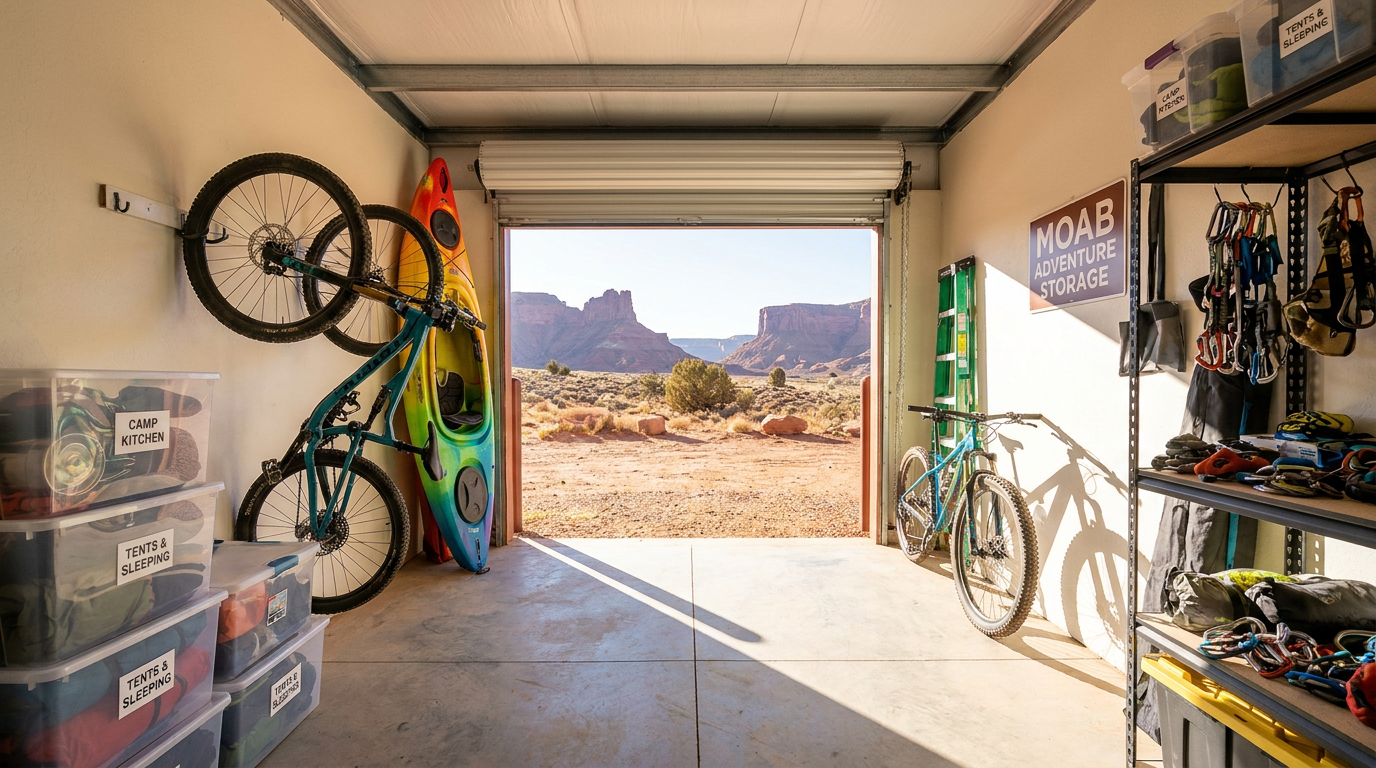
| Outdoor recreation equipment | Work and school supplies | Bulky items complicate initial setup |
| Collectibles and antiques | Electronics you use daily | Reduces damage risk during chaos |
Items that should never go into storage include perishable food, flammable liquids, propane tanks, ammunition, and living plants. Moab's summer temperatures can exceed 100 degrees Fahrenheit inside non-climate-controlled spaces, damaging candles, vinyl records, photographs, and certain medications.
Room-by-Room Packing Guide
Systematic packing prevents lost items and simplifies unpacking. Label every box with its contents and destination room using a permanent marker on at least two sides.
Kitchen: 8 to 12 Hours
The kitchen contains more fragile items than any other room. Wrap dishes individually in packing paper, not newspaper, which can transfer ink. Nest bowls and stack plates vertically like records to reduce breakage risk. Small appliances should be packed in original boxes when available.
Dispose of expired food, open spices older than 2 years, and nearly empty condiments. Defrost the freezer 24 to 48 hours before moving. Place a towel inside to absorb moisture and leave the door propped open to prevent mold.
Bedrooms: 3 to 5 Hours Each
Use wardrobe boxes for hanging clothes to minimize wrinkles and simplify unpacking. These boxes cost $8 to $15 each but save significant time. Fold heavy winter coats separately to avoid crushing lighter garments.
Mattresses require covers or bags to protect against dirt and moisture during transport. A queen-size mattress bag costs $10 to $20 at most hardware stores. Never fold a mattress, as this damages internal springs and foam layers.
Living Room: 4 to 6 Hours
Disassemble furniture when possible and keep hardware in labeled plastic bags taped to the corresponding piece. Wrap furniture legs and corners with moving blankets or bubble wrap to prevent scratches. Remove batteries from remote controls to prevent corrosion.
Electronics benefit from original packaging, but if unavailable, wrap screens with soft cloths and place in boxes with ample padding. Take photos of cable configurations behind entertainment centers before disconnecting.
Bathroom: 1 to 2 Hours
Seal liquid containers in plastic bags to prevent leaks. Dispose of expired medications at a pharmacy rather than in trash or drains. Pack towels last since they work well as padding for fragile items.
Moab-Specific Moving Considerations
Moving in Moab presents unique challenges not covered in generic moving guides. The desert climate, remote location, and seasonal population fluctuations affect every aspect of relocation planning.
Climate and Timing
Summer moves should start before 8 AM when temperatures are still below 80 degrees Fahrenheit. By noon, pavement temperatures can exceed 130 degrees, making metal truck ramps dangerous to touch and causing rapid fatigue. Hydration becomes critical; plan for 1 gallon of water per person during a full moving day.
Winter moves face different challenges. Highway 191 and Highway 128 can close during snowstorms, and ice forms quickly on shaded sections near the Colorado River. Check UDOT road conditions before scheduling movers or truck rentals between November and March.
Local Resources
Moab has limited moving company options compared to larger Utah cities. Most residents use a combination of rented trucks from U-Haul or Penske (the nearest locations are in Moab and Grand Junction, Colorado) and local helpers hired through community boards.
Packing supplies are available at City Market, Ace Hardware, and the Moab post office. For specialty items like dish packs or wardrobe boxes, order from Amazon or Home Depot with delivery to Moab, allowing 5 to 7 days for shipping.
Storage Selection
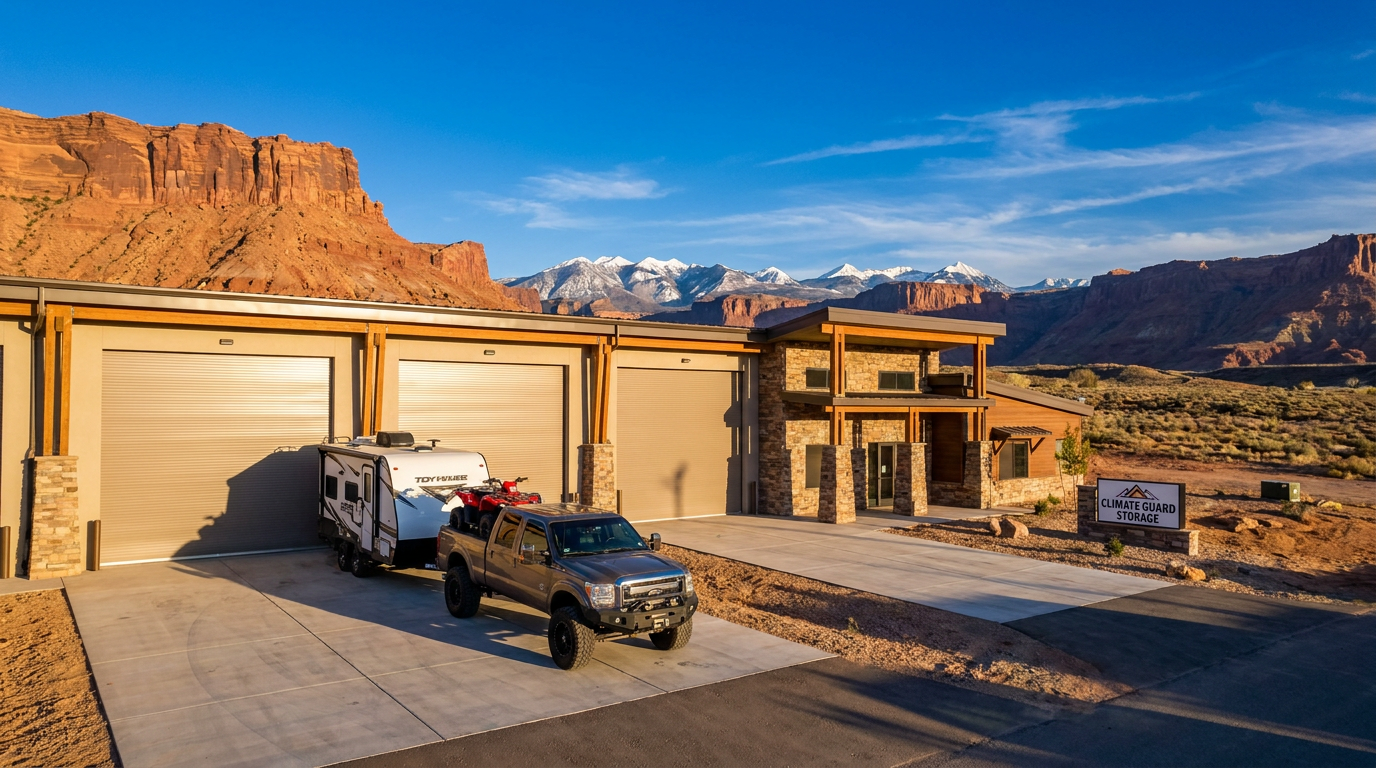
Drive-up storage units eliminate the need for dollies and elevators, which matters when storing heavy outdoor gear common to Moab households. A 10x10 drive-up unit holds the contents of a 1-bedroom apartment. A 10x20 unit accommodates a 3-bedroom home or includes space for a vehicle.
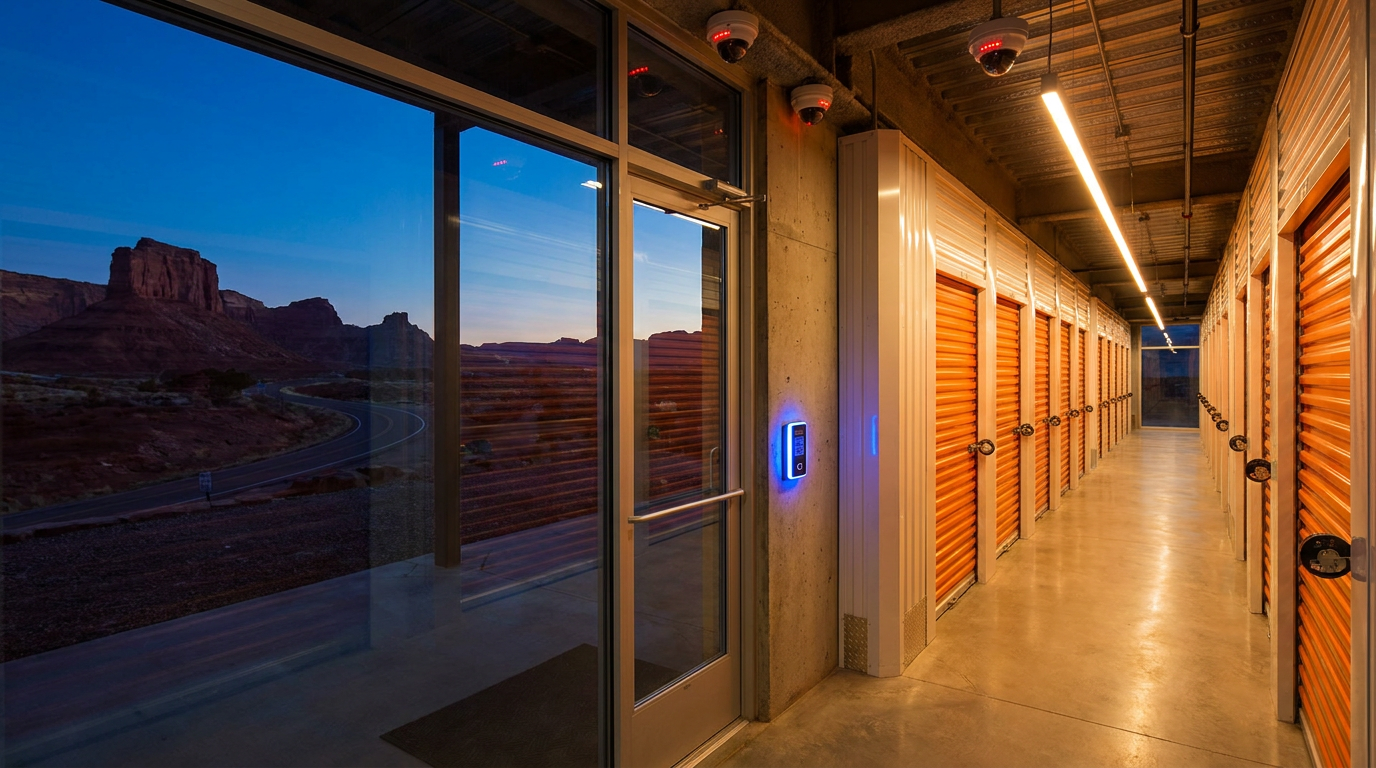
Security features to look for include digital video surveillance, access control systems, and well-lit facilities. Month-to-month rental terms provide flexibility when closing dates shift or lease transitions take longer than expected. Contact Moab Self Storage for current availability and pricing.
Move Day Checklist
The day of your move requires careful coordination to avoid delays and damage. Complete these tasks in order for the smoothest transition.
Morning tasks: Walk through every room, closet, and cabinet to confirm nothing is left behind. Check the attic, basement, garage, and outdoor storage areas. Turn off all lights, fans, and HVAC systems. Lock all windows and doors you will not use for loading.
During loading: Supervise the loading process to ensure fragile items receive proper handling. Keep your essentials box, important documents, and valuables with you rather than on the truck. Take final photographs of the empty property.
Before leaving: Return keys to your landlord or leave them as arranged with your buyer. Confirm the forwarding address with any delivery drivers. Take meter readings for utilities and photograph them for your records.
After-Move Checklist
The first week in your new home sets the tone for your entire stay. Prioritize safety and functionality before aesthetics.
Change the locks immediately if moving into a previously occupied home. This costs $75 to $200 for a locksmith or $20 to $50 for DIY replacement. Test all smoke detectors and carbon monoxide alarms; replace batteries regardless of apparent charge.
Locate the main water shutoff, electrical panel, and gas valve. In Moab homes, these are often in garages, utility closets, or exterior boxes. Knowing these locations prevents minor issues from becoming emergencies.
Unpack the kitchen and at least one bathroom first to establish basic functionality. Bedrooms come next to ensure restful sleep. Living areas and decorative items can wait until the first week passes.
Frequently Asked Questions
What is included on a moving checklist?
A comprehensive moving checklist includes timeline milestones from 8 weeks to move day, room-by-room packing tasks, utility transfer schedules, address change notifications, and post-move setup priorities. Renters need additional items for lease termination and deposit recovery, while homeowners add closing coordination and home sale documentation.
What items will movers not pack?
Professional movers typically refuse hazardous materials including propane tanks, gasoline, paint, pesticides, and ammunition. Perishable food, plants, and pets also fall outside standard moving services. Valuable items like jewelry, cash, and important documents should travel with you personally rather than on the moving truck.
What is the hardest room to pack when moving?
The kitchen is consistently the most difficult room to pack, requiring 8 to 12 hours for an average household. It contains the highest concentration of fragile items, irregularly shaped objects, and small components. Garages rank second due to heavy equipment, hazardous materials that cannot be moved, and accumulated items lacking obvious organization.
How long before a move should you start packing?
Begin packing 6 to 8 weeks before your move date for a standard household. Start with rarely used items like seasonal decorations, guest room contents, and stored belongings. The final week should focus only on daily essentials. According to NerdWallet's moving checklist, most families underestimate packing time by 40 to 60 percent.
How far in advance should I reserve a storage unit in Moab?
Reserve storage 2 to 4 weeks before your move date during off-peak months (November through February) and 4 to 6 weeks during peak season (March through October). Moab's tourism industry creates storage demand from seasonal workers and second-home owners that can fill available units quickly during busy periods.
Do I need renter's insurance when moving?
Yes. Standard renter's insurance policies typically cover belongings during a move, but coverage limits and deductibles vary. Review your policy before moving day and consider a storage protection plan if using temporary storage. The average renter's insurance claim for moving damage ranges from $500 to $2,500.

|