Storage Units in Moab, Utah: Sizes, Features, and Access Guide |
| STORAGE UNITS IN MOAB, UTAH: A RENTER’S GUIDE TO SIZES, FEATURES, AND ACCESS
⏱ 10 min read ·
📄 #1,953 words
Find the right storage unit in Moab, Utah. Compare sizes from 5x10 to 10x20, learn about drive-up access, 24/7 entry, and seasonal booking tips for renters.
|
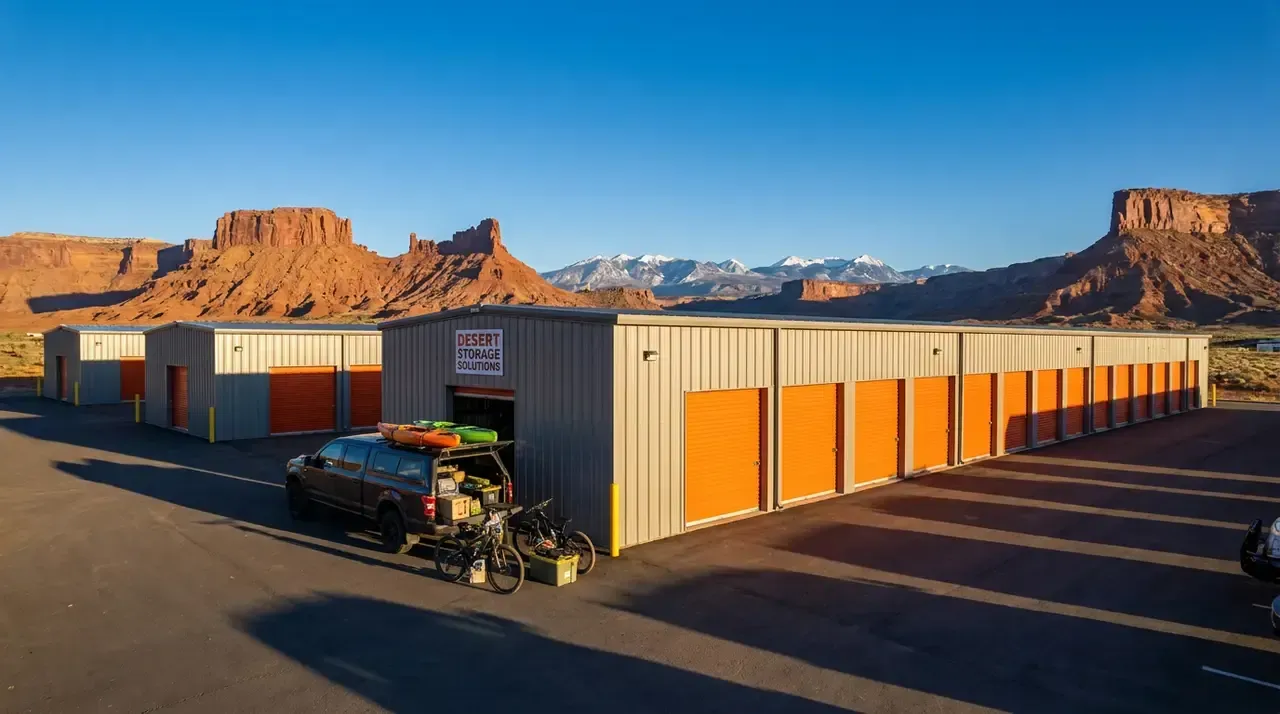
S torage units in Moab, Utah range from 5x10 spaces at $135 per month to 10x20 units at $285 per month, with most facilities offering drive-up access and 24/7 entry. The Moab market serves residents, seasonal workers, outdoor enthusiasts, and tourists needing secure storage near Arches and Canyonlands National Parks.
| Key Points: | |
|---|---|
| • | Unit sizes range from 5x10 (50 sq ft) to 10x20 (200 sq ft), with 10x10 being the industry standard for 1-bedroom apartments |
| • | Monthly rates in Moab run $135 to $285, depending on size and features |
| • | Reserve 4 to 6 weeks ahead during peak season (March through October) due to limited inventory |
| • | Drive-up units dominate the Moab market, reducing loading time by 50% compared to interior units |
| • | Most facilities offer month-to-month leases with no deposit required |
Understanding the Moab Storage Market
Moab's storage market operates differently from urban areas like Salt Lake City or Denver. The town's population of roughly 5,300 residents supports a limited number of facilities, creating tight inventory during tourist season. According to local moving and storage guides, this seasonal demand pattern affects both availability and planning timelines.
The market primarily serves four customer segments: permanent Moab Valley residents, business owners storing inventory or equipment, second-home owners, and outdoor recreation enthusiasts storing gear between trips. Each group has distinct needs that influence unit selection.
Grand County's desert climate, with summer temperatures exceeding 100°F and winter lows near 20°F, creates specific storage considerations. Most Moab facilities offer standard drive-up units rather than climate-controlled options, making item selection and packing methods particularly important.
Storage Unit Sizes: What Fits in Each Option
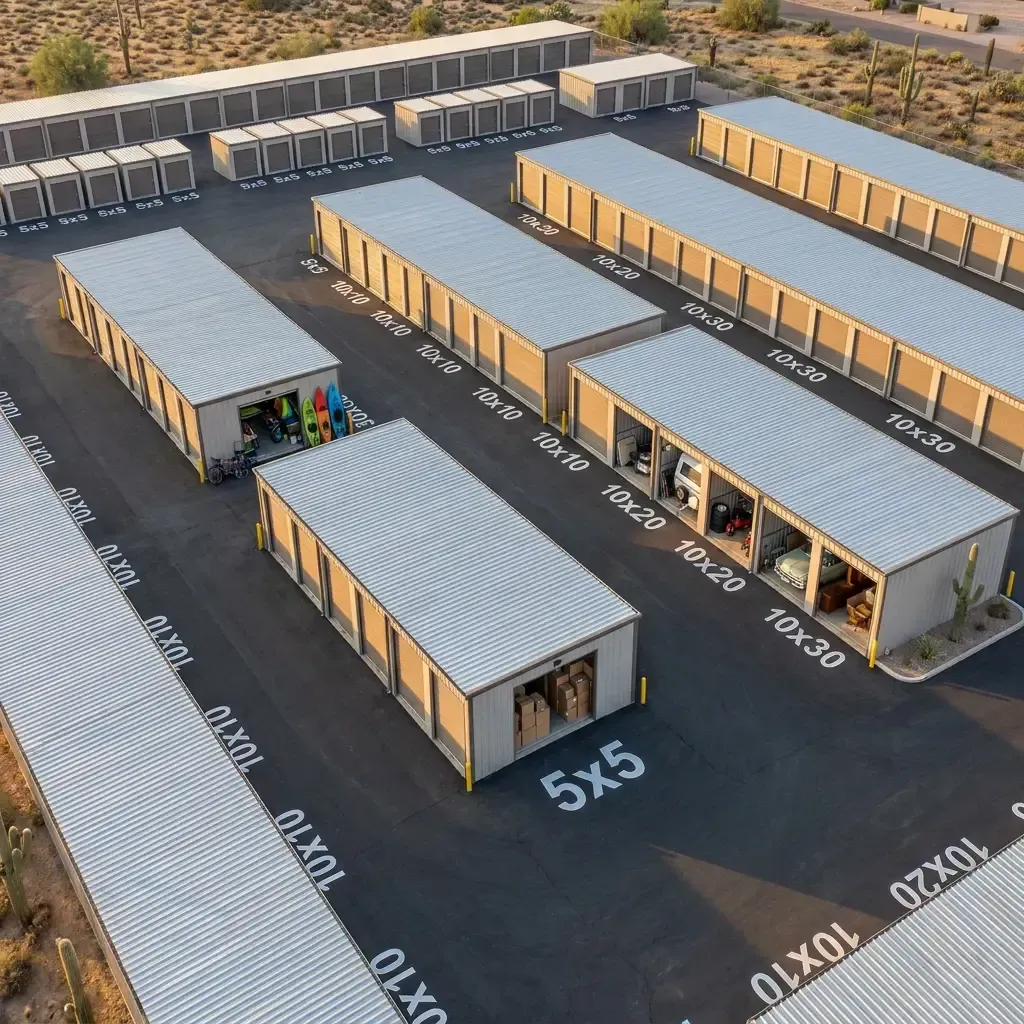
Choosing the correct unit size prevents overpaying for unused space or cramming belongings into inadequate quarters. The storage unit size guide provides detailed breakdowns, but here is how standard sizes translate to real-world use cases.
| Unit Size | Square Feet | Best For | Moab Price Range |
|---|---|---|---|
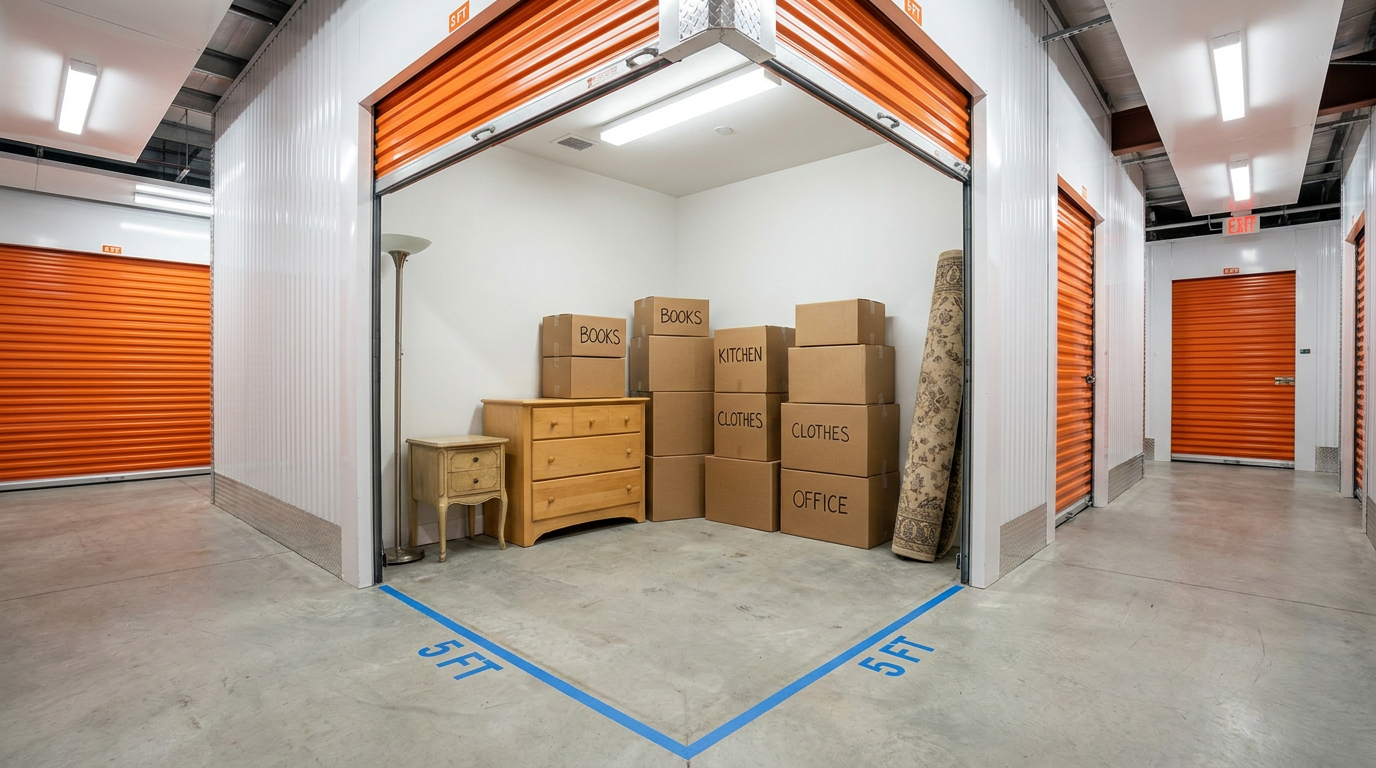
| 5x10 | 50 sq ft | Studio apartment, bikes, kayaks, camping gear | $135/mo |
| 10x10 | 100 sq ft | 1-bedroom apartment, business inventory | $175/mo |
| 10x15 | 150 sq ft | 2-bedroom home, large furniture, appliances | $205/mo |
| 10x20 | 200 sq ft | 3-bedroom home, one vehicle, contractor equipment | $285/mo |
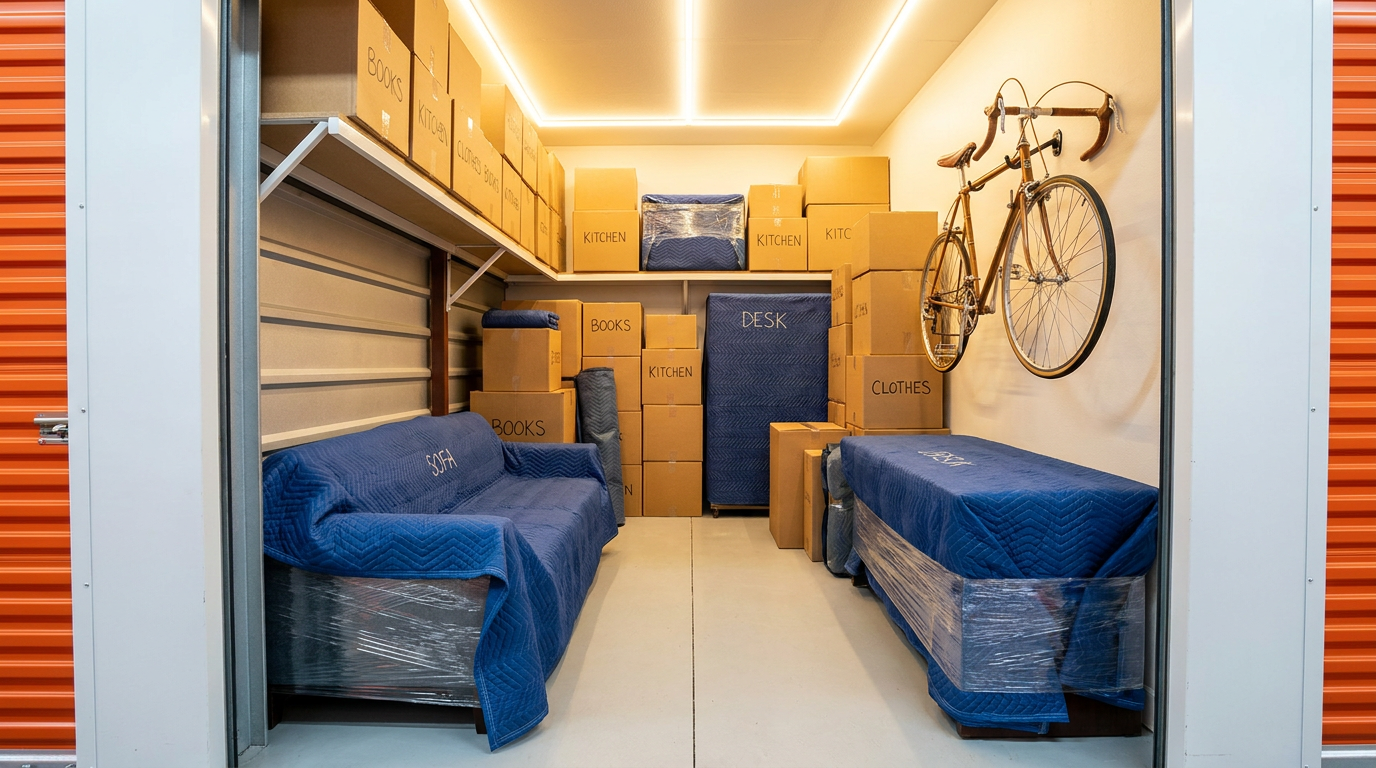
The Self Storage Association defines the 10x10 unit as the industry benchmark, equivalent to a half-garage space. This size accommodates the contents of a typical one-bedroom apartment, including a mattress set, dresser, small dining table, and 20 to 30 boxes.
Vehicle and Equipment Storage Sizing
Moab's outdoor recreation economy creates high demand for vehicle and gear storage. According to industry analysis of drive-up storage benefits, proper sizing requires measuring your largest item and adding clearance space.
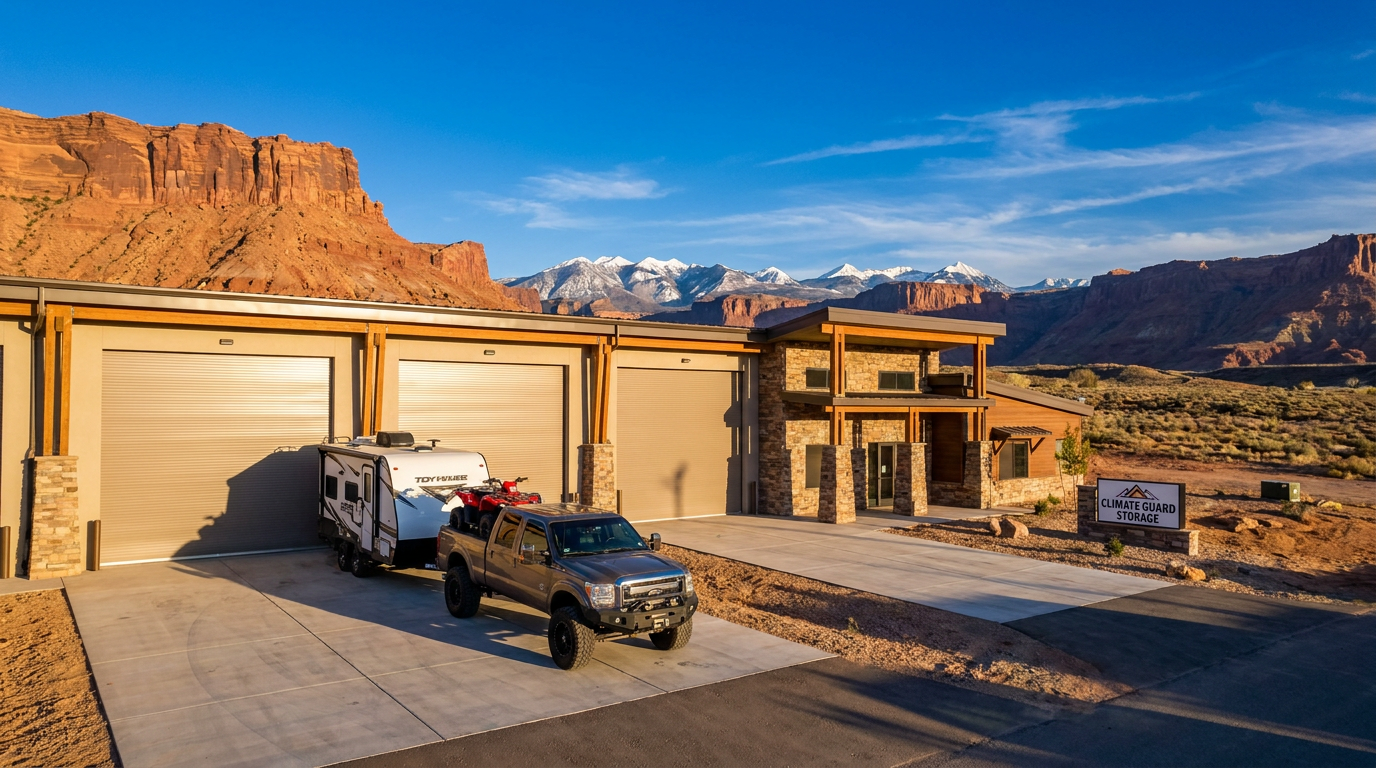
Standard passenger vehicles and pickup trucks fit in 10x20 units with room for door clearance. Compact cars may squeeze into 10x15 spaces, though maneuvering becomes difficult. Extended cab trucks, full-size SUVs, and vehicles with trailers should confirm dimensions against the 10x20, the largest unit size available.
For combined vehicle and gear storage, add 25% to 50% more space than the vehicle alone requires. A Jeep Wrangler with mountain bikes, camping equipment, and climbing gear needs a 10x20 unit despite the vehicle fitting in a smaller space.
Drive-Up Access: Why It Dominates in Moab
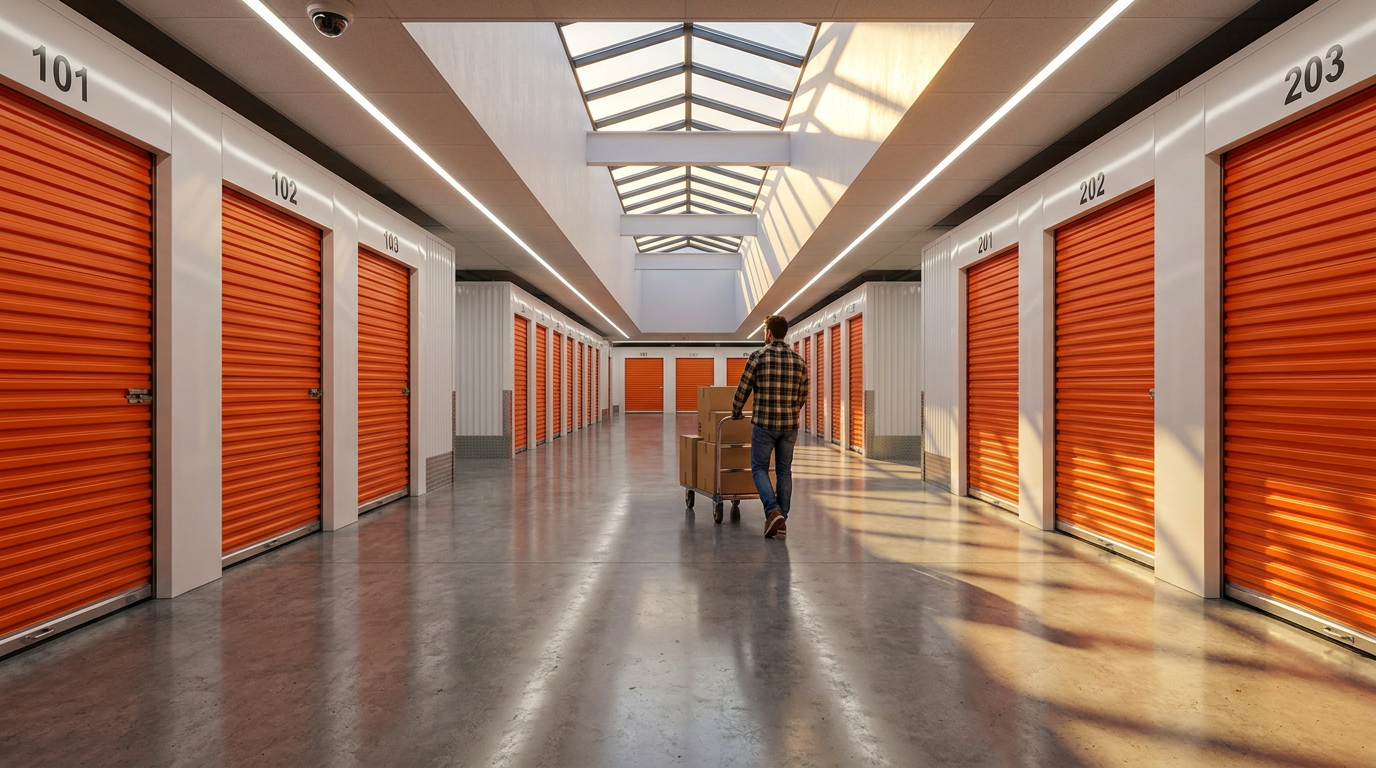
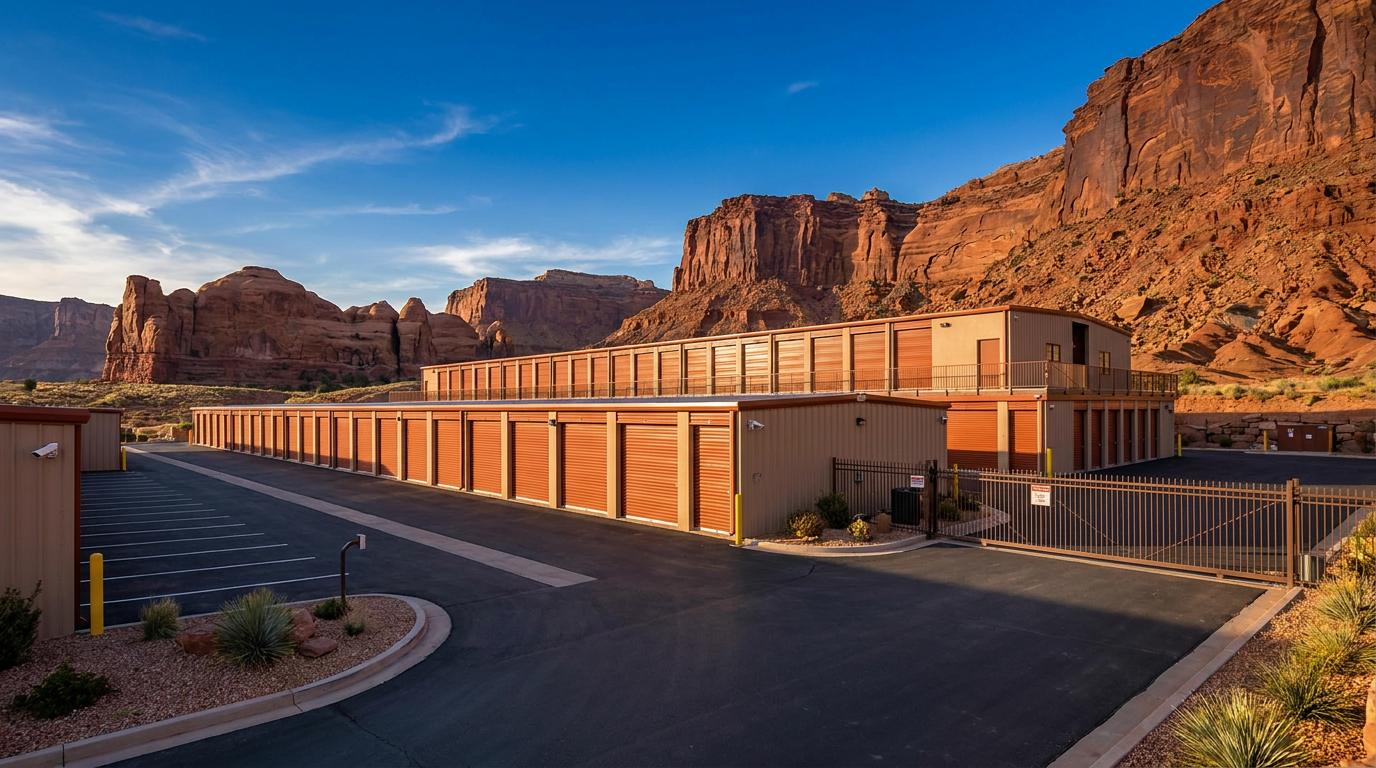
Drive-up storage units represent the primary offering across Moab facilities, and for good reason. The format allows renters to park directly at their unit door, load or unload without carts or elevators, and access items in minutes rather than navigating interior hallways.
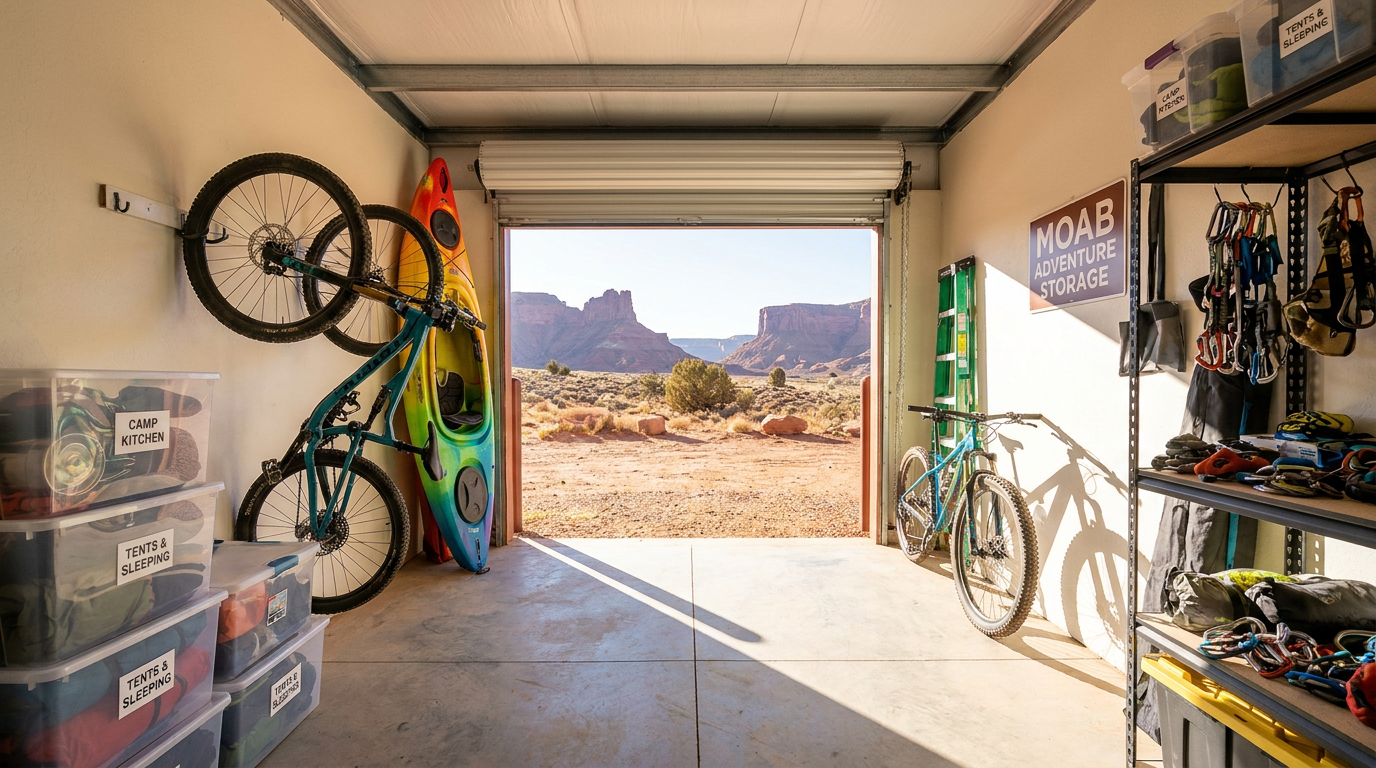
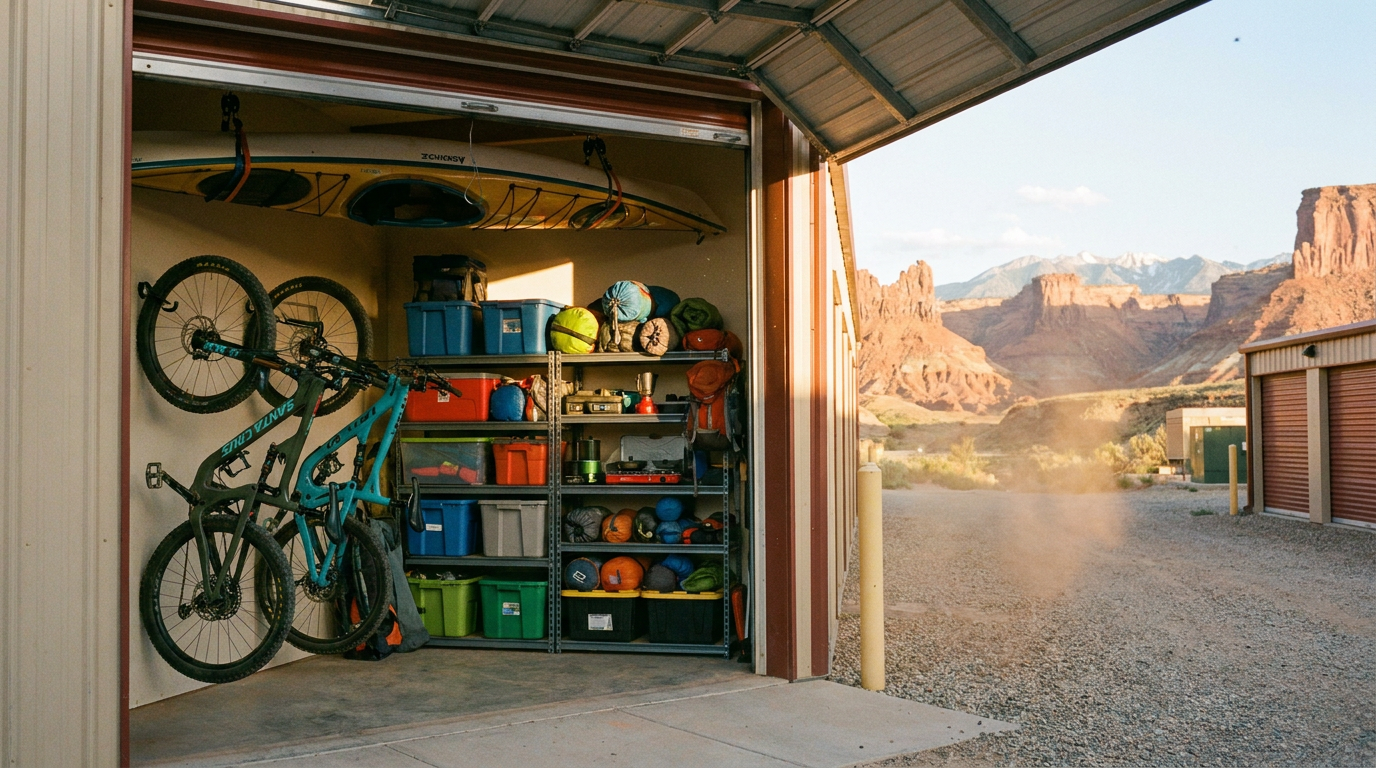
This access style proves especially valuable for Moab's outdoor enthusiasts. Loading a 65-pound kayak, multiple mountain bikes, or heavy camping gear becomes straightforward when you can back a truck directly to the unit. Interior units with elevator access would add 30 to 45 minutes per visit for the same task.
Drive-up units also benefit contractors, outfitters, and small business owners who need frequent inventory access. A river rafting company storing inflatable boats and safety equipment can complete a morning pickup in under 10 minutes with drive-up access.
Trade-offs to Consider
Drive-up units typically lack climate control, exposing contents to Moab's temperature extremes. Summer heat inside a metal storage unit can exceed 120°F, while winter temperatures may drop below freezing. Items sensitive to temperature fluctuations, including electronics, wooden furniture, vinyl records, and photographs, require additional protection or alternative storage solutions.
Security Features Worth Evaluating
Security infrastructure varies significantly between Moab storage facilities. When comparing options, evaluate these specific features rather than accepting vague claims about safety.
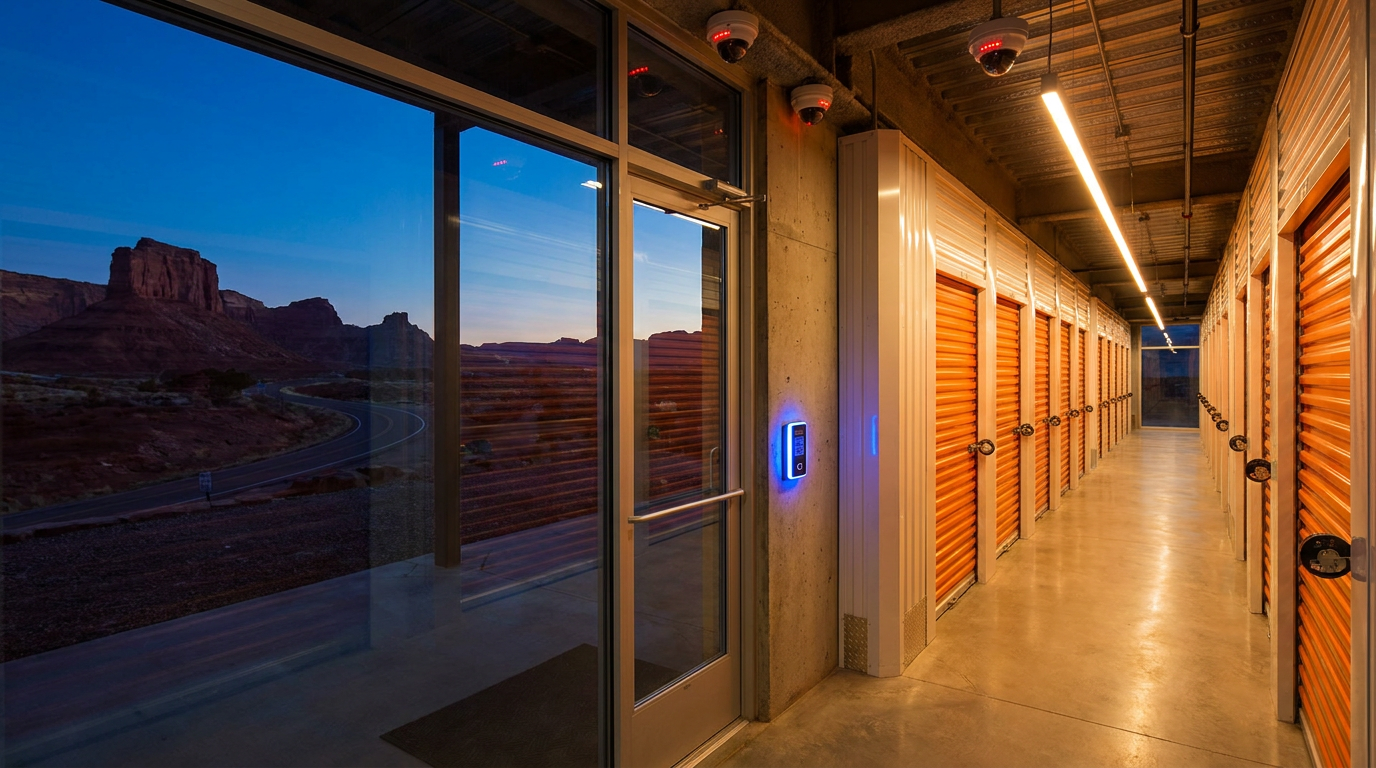
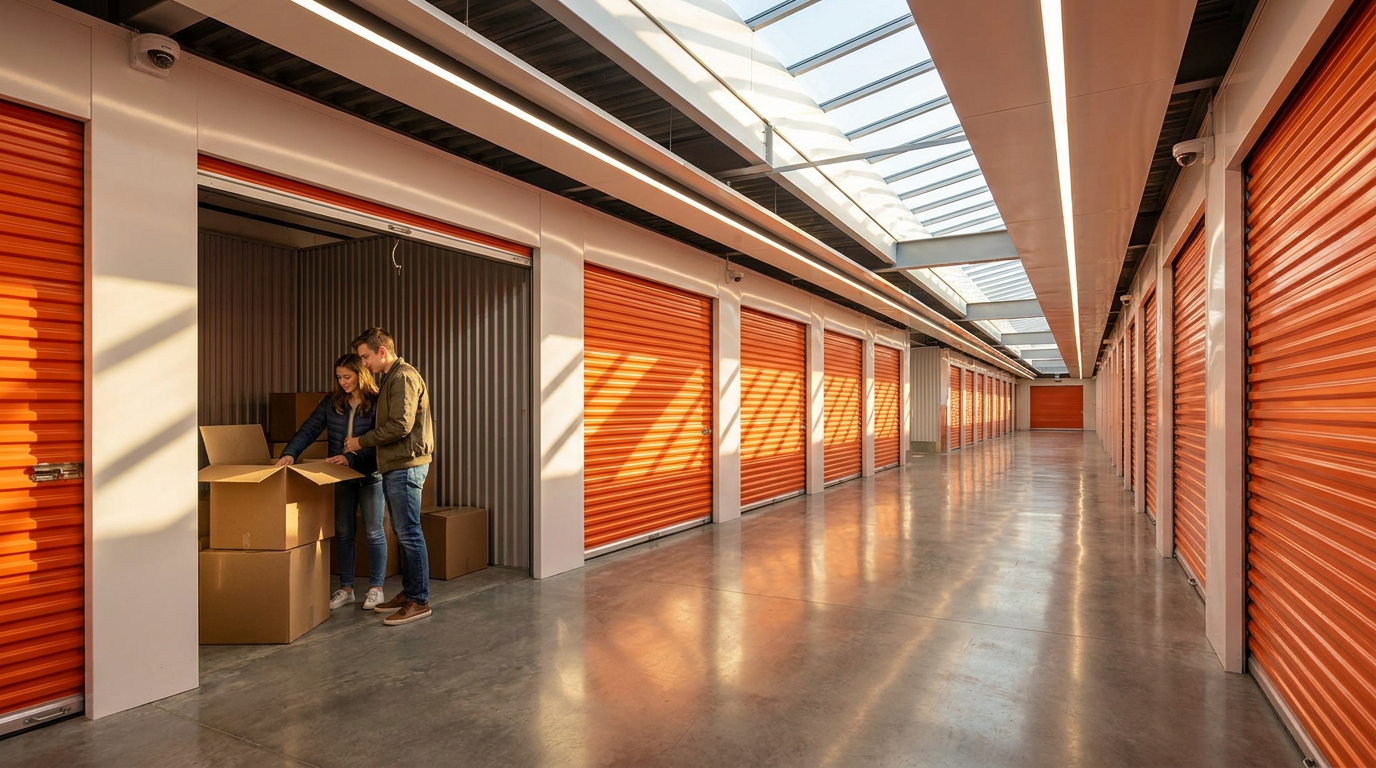
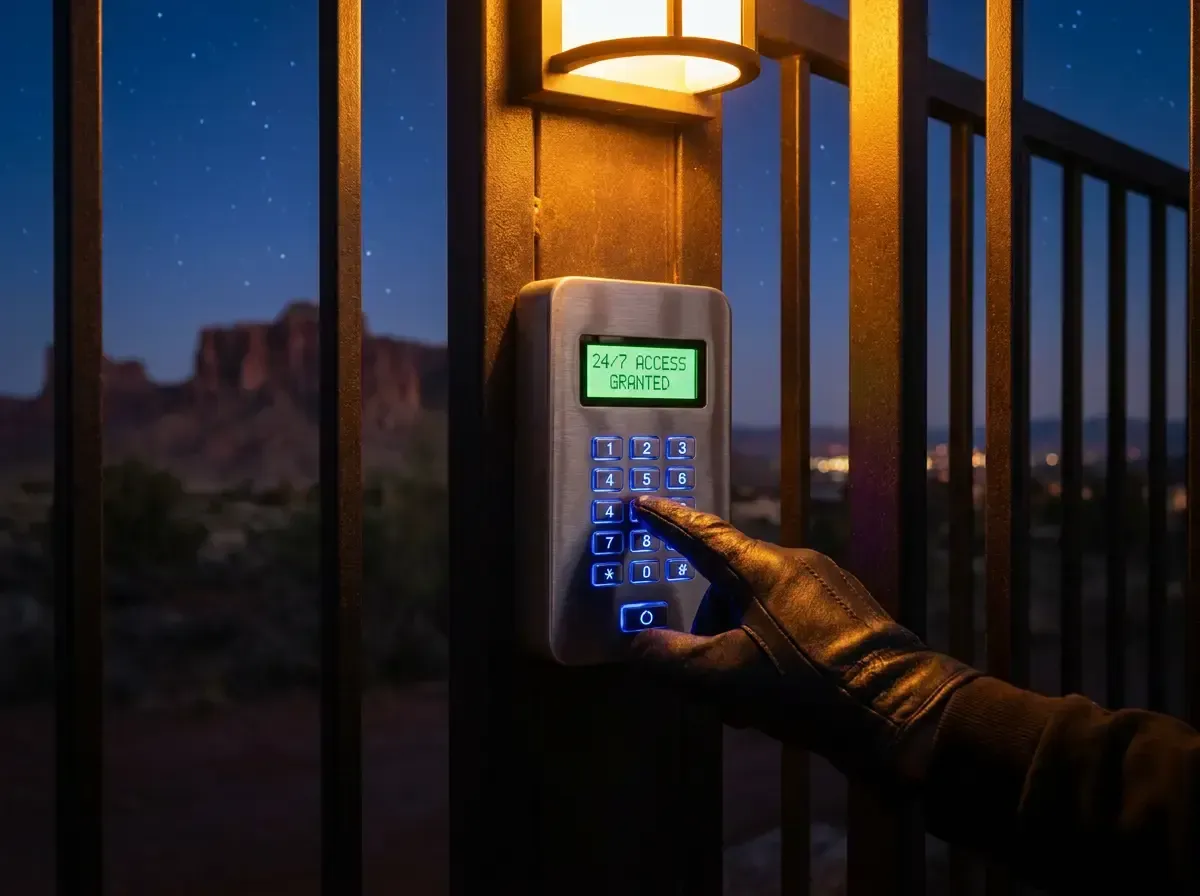
Gated access with individual codes restricts entry to current renters and creates an access log. Facilities using shared gate codes or unlocked perimeters offer substantially less protection. Digital video surveillance should cover all drive lanes and unit rows, not just the office area.
Well-lit facilities deter break-ins and improve safety during early morning or evening visits. Moab's tourism economy means many renters access units before dawn for early park entry or after dark following adventure activities. Adequate lighting matters for both security and convenience.
The tenant protection options available at your chosen facility provide additional security for valuable items. Protection plans typically cover burglary, fire, and water damage at costs between $10 and $30 monthly.
Access Hours: 24/7 Versus Limited Gates
Access policies range from true 24-hour availability to restricted gate hours, typically 6:00 AM to 10:00 PM. Your ideal option depends on how and when you plan to use the unit.
24/7 access benefits renters with unpredictable schedules: river guides launching before sunrise, photographers returning after sunset shoots, or seasonal workers with rotating shifts. U-Haul's Moab facility and several local competitors offer round-the-clock entry for this reason.
Limited gate hours may actually improve security by reducing overnight activity and concentrating visits during staffed periods. If you only need daytime access for monthly gear swaps or occasional retrieval, restricted hours present no practical limitation.
Seasonal Demand and Booking Timelines
Moab's storage market follows the town's tourism calendar. Peak season runs from March through October, coinciding with optimal weather for Arches National Park, Canyonlands National Park, and the Colorado River. Off-peak months span November through February.
This demand pattern affects both availability and planning. During peak season, popular unit sizes (10x10 and 10x20) may have waitlists at preferred facilities. Seasonal workers arriving for river guide positions or park service jobs compete with tourists storing gear and residents decluttering before summer visitors arrive.
Recommended reservation timelines based on local market conditions:
- Off-peak (November through February): Reserve 2 to 4 weeks before your move-in date
- Peak season (March through October): Reserve 4 to 6 weeks before your move-in date
- Month-end dates: Add 1 to 2 extra weeks, as these dates fill fastest
These timelines exceed typical urban markets, where same-week reservations remain possible. Moab's limited inventory and concentrated demand require earlier planning.
Cost Factors Beyond Base Rent
Monthly rent represents the primary cost, but several factors influence total expense. Understanding these variables helps you budget accurately and avoid surprises.
Size selection creates the largest cost variation. A 5x10 unit at $135 monthly costs $1,620 annually, while a 10x20 at $285 monthly totals $3,420 per year. Choosing the smallest adequate size generates meaningful savings over multi-month rentals.
Contract terms affect flexibility and sometimes pricing. Month-to-month agreements allow easy cancellation but may cost 5% to 10% more than prepaid quarterly or annual terms. For uncertain timelines, the flexibility premium usually proves worthwhile.
Protection plans add $10 to $30 monthly but cover losses from theft, fire, and water damage. Homeowner's or renter's insurance may provide some coverage, though policies vary. Check your existing coverage before declining facility protection. The frequently asked questions page addresses common insurance and protection queries.
Administrative fees at some facilities include one-time setup charges, lock purchases, or late payment penalties. Many Moab facilities have eliminated deposits and setup fees to remain competitive, but confirm all costs before signing.
Choosing the Right Unit: A Decision Framework
Follow this systematic process to match your needs with available options:
Step 1: Inventory your items. List everything requiring storage, grouping by category: furniture, boxes, outdoor gear, vehicles, and business inventory. Note any items requiring climate protection.
Step 2: Estimate space requirements. Use the size chart above as a starting point. When uncertain between two sizes, choose the larger option. The 10% to 20% price difference costs less than damage from overpacking or inability to access items.
Step 3: Determine access needs. How often will you visit? At what times? If you need early morning or late evening access, confirm 24/7 availability. Infrequent visitors can accept limited gate hours.
Step 4: Evaluate security priorities. High-value items justify facilities with comprehensive surveillance, gated access, and protection plan options. General household goods require less stringent security.
Step 5: Check availability and reserve. Contact your preferred facility 4 to 6 weeks ahead during peak season. Confirm unit dimensions, door opening sizes (critical for vehicles), and all fees before committing.
Frequently Asked Questions
What size storage unit do I need for a 2-bedroom apartment?
A 10x15 unit (150 square feet) accommodates a typical 2-bedroom apartment's contents, including major furniture, appliances, and 30 to 40 boxes. If you are storing a bed frame, mattress, couch, dining set, and dressers with boxes, this size provides adequate space with room for a center aisle.
Do I need climate-controlled storage in Moab?
Climate control protects items sensitive to temperature extremes: electronics, wooden furniture, musical instruments, photographs, vinyl records, and certain business inventory. Moab's summer heat can exceed 100°F, pushing uncontrolled unit interiors above 120°F. If storing temperature-sensitive items for more than 3 months, seek climate-controlled options or use protective measures like furniture covers and moisture absorbers.
Can I store my vehicle in a Moab storage unit?
Yes. Most passenger cars and standard trucks fit in 10x20 units. Compact vehicles may fit 10x15 spaces, while extended cab trucks and full-size SUVs should confirm fit against the 10x20, the largest size available. Measure your vehicle's length and width, then add 2 feet on each side for door clearance and walking space. Some facilities also offer covered outdoor parking for RVs and boats.
How far in advance should I reserve during tourist season?
Reserve 4 to 6 weeks before your intended move-in date during peak season (March through October). Popular sizes like 10x10 and 10x20 fill quickly as seasonal workers, tourists, and residents compete for limited inventory. Off-peak reservations require only 2 to 4 weeks lead time.
What items cannot be stored in a storage unit?
Prohibited items include hazardous materials, flammable substances, explosives, perishable food, living plants or animals, firearms (at most facilities), chemicals, and anything illegal. Specific restrictions vary by facility, so review your rental agreement. Violations can result in immediate lease termination and potential liability.
Local Resources for Moab Renters
Beyond storage selection, Moab renters benefit from understanding the broader moving and storage ecosystem. The locally owned facilities in the Moab Valley often provide more flexible service than national chains, including personalized assistance with unit selection and move-in logistics.
For renters transitioning between homes or waiting for closing dates to align, storage bridges the gap without requiring temporary housing for belongings. This scenario occurs frequently in Moab's competitive housing market, where rental turnover dates rarely match purchase closing schedules.
Outdoor enthusiasts storing gear seasonally should consider long-term rental agreements. Rather than repeatedly packing and moving climbing equipment, mountain bikes, or river gear, a dedicated storage unit provides year-round access without cluttering living spaces. The facility photos and virtual tours help you evaluate options before visiting in person.
|